
 English
 中文简体
 русский




Article Directory
- 1 Anchor the Specification to a Cable Standard, Not a Compound Datasheet
- 2 Six Parameters Every Custom Compound Order Should Fix in Writing
- 3 Match the Compound Family to the Cable Duty Before Discussing Price
- 4 Three Numbers That Only Mean Something With a Test Method
- 5 Supplier Verification: Documents, Samples and the Plant Walk-Through
- 6 Where the Cost Sits in a Custom Formulation
- 7 Questions Buyers Ask Before Approving a Formula
A compound that passes every incoming inspection can still fail on your extruder. The usual cause is not a bad batch. It is a specification that described the pellet instead of the finished cable: a temperature class quoted without an ageing condition, a flame class quoted without a test method, and a processing window left to the supplier's default.
Custom compound sourcing is a specification problem before it is a price problem. A buyer who writes the cable standard, the test method and the processing window into the purchase order receives a repeatable material; a buyer who orders 90 °C low-smoke halogen-free B1 receives whichever catalogue grade sits closest. What follows is the specification framework, the numbers that need a method attached to them, and the verification steps worth completing before the first tonne ships.
Anchor the Specification to a Cable Standard, Not a Compound Datasheet
The first line of a custom compound specification should name the cable standard the finished product must meet, because temperature rating, flame class, smoke limit and ageing condition are all derived from that document rather than from the compound itself.
The reference depends on the market the cable ships into. IEC 60227 covers PVC-insulated cables up to 450/750 V; IEC 60502-1 and IEC 60502-2 cover extruded power cables from 1 kV to 30 kV; UL 83 and UL 44 govern thermoplastic and thermoset wire in North America; EN 50525 covers harmonised European types; EN 50575 supplies the reaction-to-fire classes used in a Declaration of Performance. Once the standard is fixed, the compound's obligations are fixed with it.
Definition. A custom wire and cable compound is a thermoplastic or crosslinkable polymer formulation supplied as pellets or granules, in which base resin, filler system, flame-retardant package, stabiliser and colour are adjusted to one cable construction, one extrusion process and one end-product standard. Custom means the formulation is locked to those three variables; it does not mean the polymer itself is exotic.
A grade designation already encodes most of that decision. A name reading 90 °C, B1, halogen-free, sheath fixes four things at once: continuous temperature class, CPR flame class, halogen-free status and function inside the construction. Specify in that order and the datasheet conversation stays short.
Six Parameters Every Custom Compound Order Should Fix in Writing
Six parameters decide whether a custom compound survives your extrusion line and your customer's test laboratory: temperature class, flame and smoke class, mechanical targets after ageing, processing window, colour and surface, and packaging with batch traceability.
| Parameter | Write this into the specification | Verified by | Cost of leaving it open |
| Temperature class | 70, 90, 105, 125 or 150 °C continuous, plus short-circuit allowance | Air-oven ageing to IEC 60811-401, then mechanical tests | The finished cable has to be re-rated after the fact |
| Flame and smoke class | CPR class, IEC 60332-3 category, smoke transmittance floor | IEC 60332-3-24, IEC 61034-2, IEC 60754-2 | Declaration of Performance cannot be supported |
| Mechanical targets | Tensile strength and elongation, before and after ageing | IEC 60811-501 on dumb-bell specimens | The batch fails final test and is scrapped |
| Processing window | Melt temperature band, head pressure, recommended line speed | Extrusion trial on your machine | Surface defects get blamed on your screw design |
| Colour and surface | LAB or RAL target, gloss level, printability | Spectrophotometer reading, ink adhesion test | Shade drift between deliveries and lifted print |
| Packaging and traceability | Bag or octabin size, batch code, retention sample period | Incoming inspection record | A fault cannot be traced back to a delivery |
Row three is where most disputes start. Elongation retention after air-oven ageing is the property that separates a well-stabilised formulation from a cheap one, and it is the property least likely to appear in a quotation. Ask for the aged values with the oven temperature and duration, not the unaged headline figure.
Match the Compound Family to the Cable Duty Before Discussing Price
Material family sets the ceiling on every property that follows; PVC, low-smoke halogen-free polyolefin, XLPE, PE and XLPO each occupy a distinct temperature band and fire-safety position, and no formulation adjustment moves a compound outside its family.
| Family | Service temperature | Where it fits | Main constraint |
| PVC | 70 to 105 °C | Building wire, control cable, flexible cords, plugs, elevator cable | Hydrogen chloride release and dense smoke in a fire |
| LSZH polyolefin | 90 to 150 °C | B2ca and Cca building cables, rail vehicles, data centres, solar | Filler loading cuts elongation and raises melt viscosity |
| XLPE | 90 °C continuous, higher short-circuit peak | Medium-voltage insulation up to 35 kV, aerial insulated cable | Crosslinking step plus moisture control in storage |
| PE | 70 to 80 °C | Coaxial and communication cable, jacket, aerial | Low flame resistance on its own |
| XLPO | 105 to 150 °C | Appliance wire, automotive, oil-resistant industrial cable | Radiation crosslinking needed for the top of the range |
Custom work happens inside a family, and that is where the specification earns its value. In PVC the variables are temperature class at 70, 90 or 105 °C, plasticiser selection for a minus 40 °C cold bend, and optional anti-rodent or oil-resistant packages. In low-smoke halogen-free polyolefin the variables are flame class and filler loading, because the metal hydroxide that raises flame performance reduces elongation and raises melt viscosity. In power insulation the variable is the crosslinking route: peroxide for insulation up to 35 kV, silane for lower-voltage and aerial constructions where moisture curing is simpler to run.
Three representative grades show how much of a specification is already encoded in a compound designation:
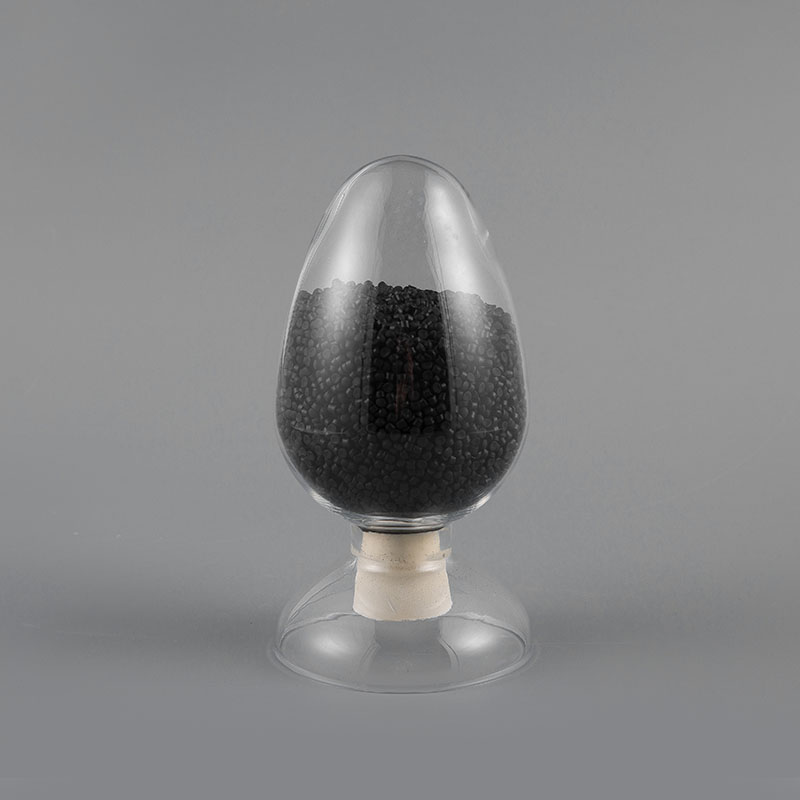
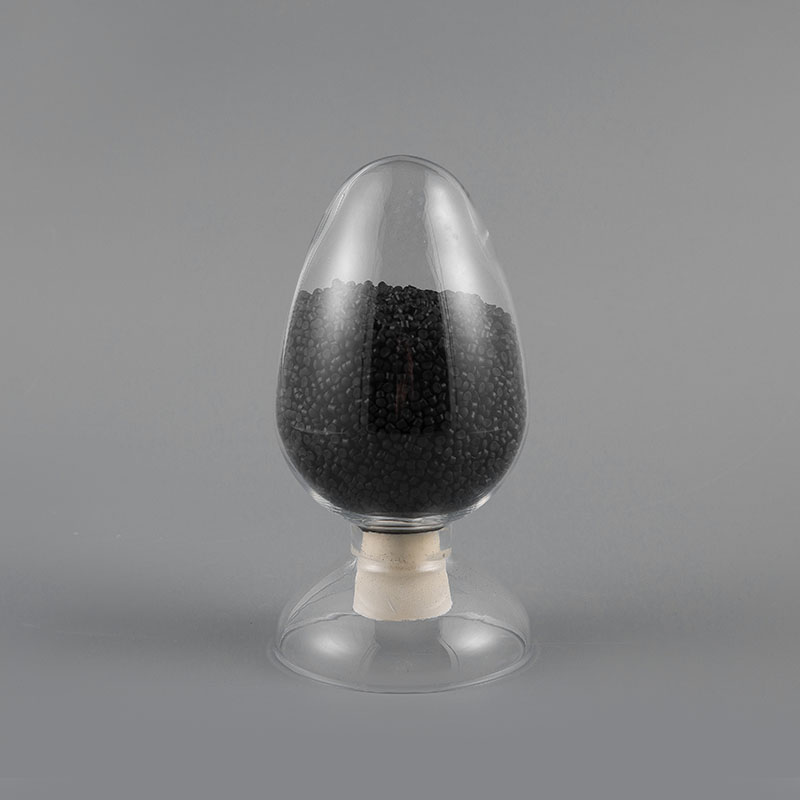 ULH-105 105°C PVC Sheath Compound for UL Cable JacketsThermoplastic PVC jacketing compound rated 105°C for flexible cords and appliance cables, with extrusion guidance and UL VW-1 flame reference.View Product → ML-H9001B1 LSZH B1 Flame-Retardant Power Cable SheathThermoplastic low-smoke halogen-free sheath compound for power and control cables, specified to GB/T32129 and B1 bundled combustion under GB 31247, with 60% light transmittance.View Product →
 ML-YJ35 Peroxide XLPE Insulation Compound for 35 kV CablesPeroxide cross-linked polyethylene insulation compound for power cables up to 35 kV, listed as compliant with JB/T 10437-2004 for this application.View Product →
Three Numbers That Only Mean Something With a Test Method
Hot-set elongation, limiting oxygen index and smoke transmittance are mis-specified more often than any other properties, because each is meaningless without its load, method and conditioning.
Those two hot-set limits come from IEC 60811-507 as applied in IEC 60502-1. Quote the method number alongside the limits, or two suppliers can report the same compound against different conditions and both be technically correct.
Limiting oxygen index is reported as the percentage of oxygen in a nitrogen-oxygen mixture at which a burning specimen self-extinguishes, measured to ASTM D2863 or ISO 4589-2. A compound quoted at 32% is not simply better than one at 28%: the higher figure usually comes from more mineral filler, which raises density, lowers elongation and shifts the extrusion window. Specify the index, the method and the specimen thickness together.
Smoke and gas data follow the same rule. IEC 61034-2 measures light transmittance in a 3 m cube; IEC 60754-2 measures pH and conductivity of gases evolved during combustion, with pH of at least 4.3 and conductivity of no more than 10 microsiemens per millimetre as the conventional pass values. A halogen-free claim without those two reports is a marketing statement, not a specification.
Supplier Verification: Documents, Samples and the Plant Walk-Through
Approve a compound supplier on four pieces of evidence: method-referenced test reports, a sample drawn from the line that will run your order, an in-house laboratory you can inspect, and a formulation that stays identical between batches.
- Request the full test report set with method numbers and conditioning, not a summary table of typical values.
- Ask for the trial quantity to be produced on the line that will supply the order, with the batch code printed on the bag.
- Run your own extrusion trial at the line speed and conductor size you actually use, recording head pressure, melt temperature and surface quality.
- Compare the laboratory and testing equipment against the methods printed on the report, then inspect the mixing and pelletising areas.
- Walk the workshop environment for the line your grade will run on, then lock the formulation in writing with a change-notification clause.
Hangzhou Meilin New Materials Technology Co., Ltd. matches the profile this checklist is built to test: a cable compound manufacturer operating since 1994, with three production bases in Hangzhou, Zhejiang, 31 automated lines and an in-house laboratory presented alongside its workshop environment. The point of the walk-through is not the equipment list. It is whether the equipment, the method numbers on the report and the line that fills your order are the same three things.
Where the Cost Sits in a Custom Formulation
Base resin and flame-retardant filler dominate the cost of a custom compound, and most formulation changes that raise one property are paid for somewhere else in the specification.
- Base resin grade and melt index: a narrow processing window usually means a tighter, more expensive resin selection.
- Flame-retardant loading: moving from a Dca to a B2ca class generally requires more metal hydroxide, and that loading reduces elongation.
- Plasticiser and stabiliser package: flexibility at minus 40 °C, oil resistance and long-term ageing are separate cost lines, not free add-ons.
- Batch size and changeover: at small annual volumes, cleaning and testing between runs can outweigh the polymer cost, so treat that trade-off as a planning estimate to confirm against the supplier's minimum batch size.
Cheaper formulation, dearer process
Trimming filler or stabiliser lowers the invoice price and moves cost to the extruder: lower output, more start-up scrap, more frequent screen changes.
Dearer formulation, cheaper process
A tighter formulation with a documented window runs at stable output with fewer stops, which is where the saving shows up across a year of production.
Questions Buyers Ask Before Approving a Formula
How much more does a custom grade cost than a catalogue grade?
The polymer is rarely the difference. A custom grade carries batch size, changeover and test package costs, so whether it costs more depends on annual volume per grade and on how much certification evidence you ask for. Buyers who consolidate a family into one grade usually close most of the gap.
Can an approved compound be re-graded when the cable design changes?
Temperature class and flame class are formulation-level properties. Moving from 90 °C to 105 °C, or from Dca to Cca, requires a new grade and new test evidence. Colour, packaging and surface finish can be adjusted within an existing grade without re-qualifying the electrical and fire performance.
Which documents should arrive with each delivery?
A certificate of analysis with measured values and method numbers, a batch code that matches the retained sample, and RoHS and REACH declarations. The CPR or UL evidence lives with the grade file rather than the delivery, but it must be traceable to the batch code on the bag.
The compound that works is the one whose specification names a standard, a method and a processing window before the price is agreed. Everything after that, from the grade name on the bag to the certificate in the file, is evidence that those three things stayed the same.