
 English
 中文简体
 русский



Article Directory
A 33 kV feeder laid in saturated clay and a submarine export cable crossing a tidal landfall fail for the same reason: water reaches the insulation screen. In both cases the decisive choice was made months before installation, when the compound was specified.
Water-resistant cable compounds are not a single product family. Four separate decisions decide whether a wet-environment cable reaches its design life: the oversheath polymer, the water-blocking system around the core, the adhesion between layers, and the metal barrier that blocks radial ingress. A black HDPE oversheath laid over an incompatible swellable tape produces a cable that passes the factory test and fails in service.
The sections below cover how compound families differ in water behaviour, which tests predict buried and subsea performance, and how to write the requirement so that compound and blocking system are qualified together.
What Water Resistance Means at the Compound Level
A water-resistant cable compound is a formulation specified to limit water uptake and water vapour transmission while retaining its mechanical and electrical properties after long immersion.
Water reaches a cable core through three routes. Bulk absorption is the equilibrium uptake inside the polymer itself. Permeation is vapour diffusion through the wall of the sheath, driven by the moisture gradient between soil and cable interior. Hydrolysis and extraction attack the formulation, where plasticizers and soluble fillers leave the compound and enter groundwater. Insulation at medium voltage carries a fourth exposure, water treeing, which starts at voids and contaminants under sustained electric stress in a wet environment.
Water resistance is a measured combination, not a single property: equilibrium water absorption, water vapour transmission, and retention of tensile strength and elongation after wet ageing. A compound that performs on one of those and poorly on the others is not water-resistant.
- Bulk absorption is measured to ISO 62 or IEC 60811-402. Unfilled HDPE sits below 0.01 percent after 24 hours at 23 degrees Celsius; plasticized PVC compounds commonly fall between 0.2 and 0.5 percent, depending on plasticizer loading. Treat those as class figures and re-confirm them on the delivered lot.
- Vapour transmission for unfilled HDPE runs roughly an order of magnitude below plasticized PVC at equal wall thickness, which is the technical reason black PE oversheaths dominate buried power cable.
- Wet ageing compares tensile strength and elongation at break before and after immersion, following IEC 60811-501. Acceptance values belong in the specification, because general data sheets rarely state the immersion condition behind the number.
- Water treeing is the degradation mode that decides XLPE service life at medium voltage. Water-tree-retardant grades are prequalified against accelerated treeing tests such as those defined in AEIC CS8.
Underground and Submarine Duty Are Not the Same Water Problem
Buried cables face constant low-pressure permeation and soil chemistry; submarine cables face hydrostatic pressure that rises by roughly 0.1 MPa for every 10 m of depth, plus abrasion, anchor damage and, in wet designs, direct contact between water and insulation.
- Radial barrier: laminated aluminium tape or lead over the core, with the oversheath protecting the barrier from mechanical damage.
- Longitudinal blocking: swellable tapes, yarns and gel fillers that stop water migrating along the conductor once the sheath is cut.
- Soil exposure: chloride and sulphate content, stray current, rodent and termite attack, and backfill abrasion during pulling.
- Wet design: water is allowed to reach the insulation, and damage is controlled by void-free extrusion and water-tree-retardant materials rather than by sealing.
- Dry design: an extruded or welded lead, aluminium or copper barrier keeps water out radially, and the layers beneath it absorb the thermal load of that process.
- Mechanical duty: armour wire bedding, landfall abrasion, and fishing-gear or anchor contact on shallow routes.
The two duty classes therefore load different layers. On a buried 11 kV cable the oversheath carries most of the water-resistance duty. On a wet-design submarine cable the insulation and semiconductive screens carry it, and the oversheath works mainly as an abrasion layer over the armour bedding.
Matching Compound Families to the Water Threat
Black HDPE and MDPE oversheaths are the default for buried and subsea power cables, unfilled LLDPE covers communication and control cables, and water-tree-retardant XLPE governs the electrical core of wet designs.
The comparison below separates what each family does against water from the selection risk that decides whether it suits a specific route.
| Compound family | Water behaviour | Typical wet-environment use | Main selection risk |
| Black HDPE and MDPE | Absorption below 0.01 percent at 24 hours in unfilled resin; lowest vapour transmission among common sheath polymers | Buried MV and HV oversheath; submarine oversheath over armour bedding | Carbon black content and dispersion must be controlled; stiffness raises low-temperature impact risk |
| LLDPE | Low absorption with higher flexibility than HDPE | Communication, control, signal and optical fibre cable sheaths | Thin-wall extrusion needs tight die and cooling control |
| Water-tree-retardant XLPE | Functions as insulation rather than a barrier; retardant grades limit tree growth under sustained wet stress | MV and HV insulation; wet-design submarine cores | Requires controlled-cure or dry-cure extrusion and clean handling |
| Semiconductive compound | Bonded or strippable screens that prevent water tracking along the insulation surface | Conductor and insulation screens on XLPE cable | Adhesion balance decides strippability and moisture sealing |
| Plasticized PVC | Absorption of 0.2 to 0.5 percent typical; plasticizer can migrate into wet soil | LV buried and duct cable; flame-retardant sheaths | Long-term plasticizer extraction; not a fit for long-life HV duty |
| Mineral-filled LSZH polyolefin | Higher polarity and water uptake than unfilled PE | Station entries, tunnels, landfall transition joints | Compatibility with swellable tapes and wet-ageing retention must be verified |
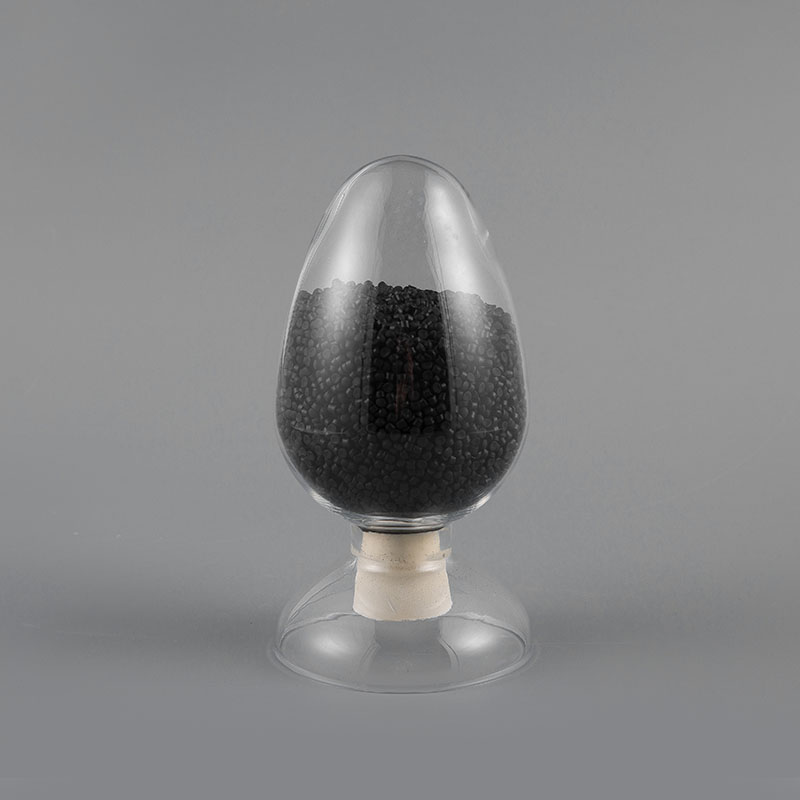
For power cable oversheaths, Hangzhou Meilin New Materials Technology Co., Ltd. lists HDPE grades that cover buried sheath duty, aerial insulation and sheath, and submarine sheath duty within one product line. The selection note on PE compounds for underground power cable applications covers the sheath-side requirements in more detail.
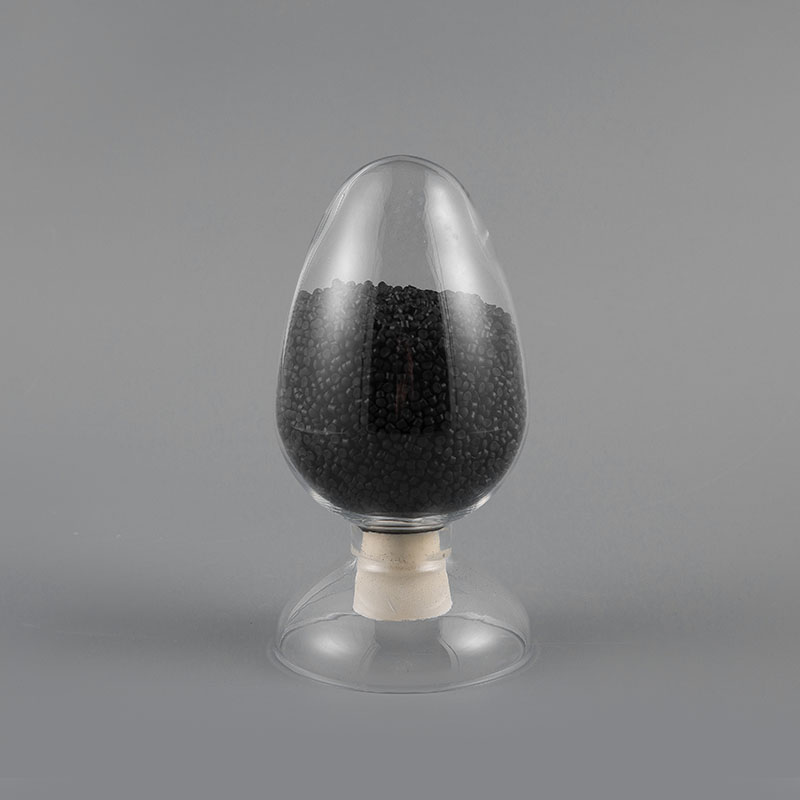 ML-HPE-9600 HDPE Compound for Power Cable SheathsPE compound for power cable oversheaths, aerial insulation and sheaths, and submarine sheaths; the page states moisture resistance and GB/T15065-2009 testing.View Product →
Interfaces Fail Before the Bulk Compound Does
Failures in wet-environment cables concentrate at interfaces, at the boundary between oversheath and bedding, between tape and filler, and between screen and insulation, before they appear in the bulk compound.
The mechanism is thermal. A swellable tape is designed to expand when water reaches it, and that expansion depends on the tape being partly encapsulated by the sheath and activated within the sheath extrusion temperature window. Specify a compound with a lower processing temperature than the tape can tolerate and the blocking layer stays dormant. Specify a compound with high melt viscosity and the sheath may not fill the space around the tape at all.
Verify absorption and wet ageing per lot
Run ISO 62 or IEC 60811-402 absorption and IEC 60811-501 mechanical checks before and after immersion on the delivered lot, not only on the qualification sample.
Test the blocking system with the compound
Confirm swell rate, gel stability and filler compatibility at the extrusion temperature actually used on the line. A tape that activates at 10 degrees above your sheath profile is the wrong tape.
Check oversheath integrity
IEC 60229 covers abrasion, notch, penetration and the other special protective functions of an extruded oversheath, and it is the practical barrier against handling damage on site.
Qualify against the cable standard
Type tests run to IEC 60502-2 for 1 to 30 kV cables, IEC 60840 for 30 to 150 kV and IEC 62067 above 150 kV; submarine power cables from 6 to 60 kV are covered by IEC 63026.
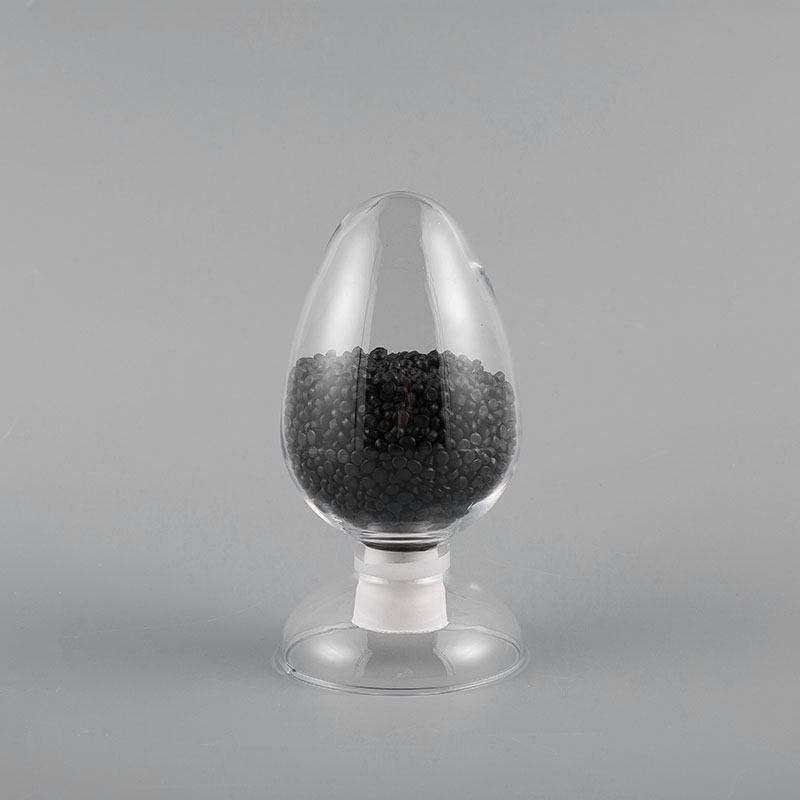
For communication, control and optical fibre constructions, the water duty sits in a much thinner wall, and flexibility matters as much as absorption. Meilin's LLDPE grades are positioned for exactly that combination of thin-wall extrusion and low uptake, which is why the same plant runs both sheath families on separate lines.
ML-LLPE-9400 LLDPE Compound for Communication and Control CablesLLDPE compound for communication, control, signal, optical fibre, power cable and power cord uses, stated to offer stress cracking resistance, moisture resistance and insulation performance.View Product →Writing Water Resistance Into the Purchase Order
A purchase order that names a compound without a test method, immersion condition and acceptance value gives the supplier nothing measurable to meet.
- Resin family plus density and melt index range, so that processing behaviour is fixed before extrusion trials.
- Absorption method and condition, for example ISO 62 at 24 hours and 23 degrees Celsius, with the acceptance value stated as a percentage.
- Wet-ageing retention of tensile strength and elongation at break, with the immersion duration and temperature written out.
- Carbon black content and dispersion for black PE grades, typically 2.0 to 2.5 percent by mass and confirmed by dispersion check on a microtome slice.
- The blocking system the compound must run against, including tape type, gel or filler, and the extrusion temperature profile.
- Prequalification standard, lot sampling plan, certificate of analysis and batch traceability back to the production line.
Supplier capability belongs in the same document. Hangzhou Meilin New Materials Technology Co., Ltd. has operated since 1994, runs three plants in the Lin'an district of Hangzhou with 31 automated production lines, and maintains an in-house area for laboratory testing equipment used for incoming and finished-lot checks. A supplier that can show absorption, mechanical and thermal data from its own laboratory shortens the qualification cycle by months.
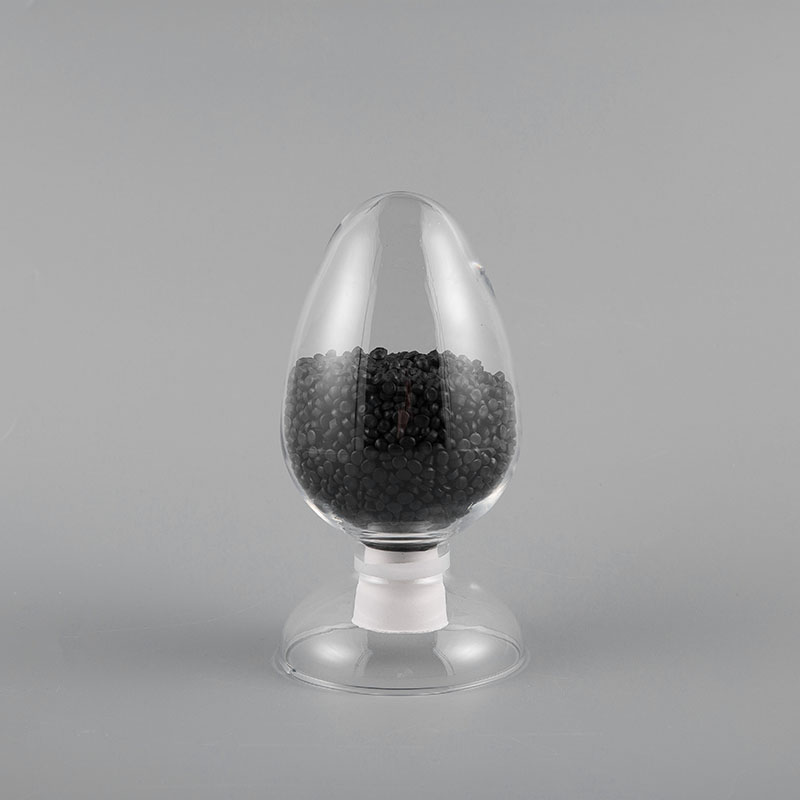
ML-ZRPE-D Halogen-Free Flame-Retardant Power Cable SheathHalogen-free, low-smoke flame-retardant PE sheath for medium- and low-voltage power cables, stated to meet GB/T12706 ST7 and pass bundle C combustion tests.View Product →
Is a thicker oversheath enough to stop water ingress in buried cable?
No. Permeation through a polymer sheath scales inversely with wall thickness, so doubling the wall halves the vapour transmission rate rather than stopping it. IEC 60502-2 sets nominal oversheath thickness as a function of cable diameter for mechanical protection; the water duty is closed by longitudinal blocking and, on HV designs, a radial metal barrier.
Do submarine cables use the same compound as buried cables?
The polymer family is often the same, the grade and test package are not. A submarine power cable from 6 to 60 kV is qualified to IEC 63026, which adds mechanical and water-penetration requirements that a standard buried oversheath grade is not tested against; project specifications on top of that usually define armour bedding and landfall protection.
Is LSZH the wrong choice for wet locations?
Not wrong, but it changes the risk profile. Mineral-filled LSZH compounds are more polar than unfilled PE and absorb more water, and EVA-based systems need hydrolysis checked over the design life. Use LSZH where fire performance dominates, such as station entries and tunnels, and verify wet-ageing retention and tape compatibility rather than assuming PE-level absorption.
What water absorption value should be written into the specification?
State the method and the condition first, then the value. A limit of 0.05 percent means one thing at 24 hours and 23 degrees Celsius per ISO 62 and something entirely different after long immersion at elevated temperature. For buried and subsea duty, request both a short-term figure and a long-duration immersion result, and require the same test to be repeated on production lots.