
 English
 中文简体
中文简体 русский



Article Directory
- 1 Smoke, Not Fire, Decides How a Tunnel Incident Ends
- 2 Which Standards Govern Metro and Subway Cable Compounds?
- 3 Compound Architecture: Insulation, Sheath, and Inner Protection Layers
- 4 Property Targets That Matter in Real Specifications
- 5 Processing LSZH on the Extrusion Line
- 6 What to Verify with the Supplier Before Qualification
- 7 Selecting LSZH Compounds for Metro and Subway Applications
Smoke, Not Fire, Decides How a Tunnel Incident Ends
A metro tunnel does not behave like an open building. Smoke has nowhere to escape, combustion gases travel along ventilation flows, and the time passengers have to evacuate is measured in minutes. For a cable manufacturer or system integrator, this changes how materials are specified. The priority is not simply to stop the cable from burning; it is to keep smoke generation low, keep halogen acids out of the atmosphere, and keep toxic combustion products below survivable thresholds.
Low-smoke zero-halogen (LSZH) compounds exist because conventional PVC compounds release dense, acidic smoke. When PVC burns in a damp tunnel, the halogen content converts into hydrogen chloride, which combines with moisture to form hydrochloric acid. That acid attacks traction power equipment, control cabinets, and signaling circuits long after the flames are suppressed. It also makes evacuation routes unserviceable. LSZH cable compounds are engineered to burn with far less smoke, release no halogen acids, and produce significantly lower toxic gas. That is why metro and subway projects across Europe, North America, and Asia have moved LSZH from a value-added option to the minimum baseline.
Which Standards Govern Metro and Subway Cable Compounds?
Metro and subway cables sit at the intersection of building safety and rail safety. The materials therefore have to satisfy sector-specific standards, not just generic cable tests. The three frameworks that appear most often in international tenders are EN 45545-2, NFPA 130, and the Chinese TB/T or GB series. Each defines how smoke density, gas acidity, toxicity, flame propagation, and oxygen index are measured, and what limits apply at different hazard levels.
| Standard | Scope | Key material-level requirements |
|---|---|---|
| EN 45545-2 | European rail, including metro and light rail systems | R15 cable parameter set; defines smoke density, toxicity index CIT, and oxygen index requirements across hazard levels HL1, HL2, and HL3. |
| NFPA 130 | Fixed guideway transit in North America | Limits flammability, smoke production, and toxic gas generation for cables in stations, tunnels, and transit vehicles. |
| TB/T 3237 and related GB standards | Metro, railway, and urban transit in China | Requires halogen-free low-smoke compound performance, covering halogen acid gas content, smoke density, oxygen index, oil resistance, and low-temperature flexibility. |
If the project is governed by EN 45545-2, the practical question is which hazard level applies to each cable location. Materials that pass HL2 are not automatically suitable for HL3 routes because smoke growth, toxicity, and heat release limits are tightened at each level. Our review of EN 45545-2 fire-safety requirements for transport cables explains how the hazard-level system maps to compound choice and is a useful starting point when a tender mentions the standard by name.
Compound Architecture: Insulation, Sheath, and Inner Protection Layers
Thermoplastic or Crosslinked LSZH
The first decision in compound selection is whether the insulation and sheath should be thermoplastic or crosslinked. Thermoplastic LSZH grades are processed on ordinary extruders, offer shorter manufacturing cycles, and work well for 70 °C and 90 °C rated metro cables. Crosslinked grades—either by silane grafting or electron-beam radiation—deliver higher continuous service temperatures, better deformation resistance under short-circuit conditions, and improved oil and solvent resistance. For cables routed through locomotive compartments, power converters, or tunnel sections with high ambient temperatures, crosslinked LSZH is usually the safer engineering choice.
Roles of Sheath and Insulation in a Tunnel Environment
The sheath is the first line of defence. It must keep flame from reaching the core, minimize smoke when it does burn, and survive abrasion, oil splash, and cold installation conditions. The insulation, meanwhile, must preserve dielectric strength through thermal cycling and repeated mechanical stress. A cable can fail in service even when its sheath passes every fire test because the insulation was specified for electrical properties alone. Rail operators therefore include both thermal and mechanical criteria for the insulation. The mechanical integrity of LSZH compounds under rail operational loads has to cover tensile strength, elongation at break, and cold bending behaviour, because those properties determine whether a cable survives being pulled through ducts, dragged over edges, and clamped in confined shafts.
For rolling stock and transit cable production, a 90 °C halogen-free low-smoke B1-class sheath compound is a common starting point: it offers a high oxygen index, low smoke density, and enough flexibility for tight tunnel routings. Where the cable needs a thin yet reliable insulation wall, radiation-crosslinked LSZH insulation grades preserve performance while keeping the overall cable diameter under control. In designs that carry data or control circuits adjacent to power pairs, an oxygen-barrier LSZH inner sheath provides additional separation without introducing halogen chemistry into the cable structure.
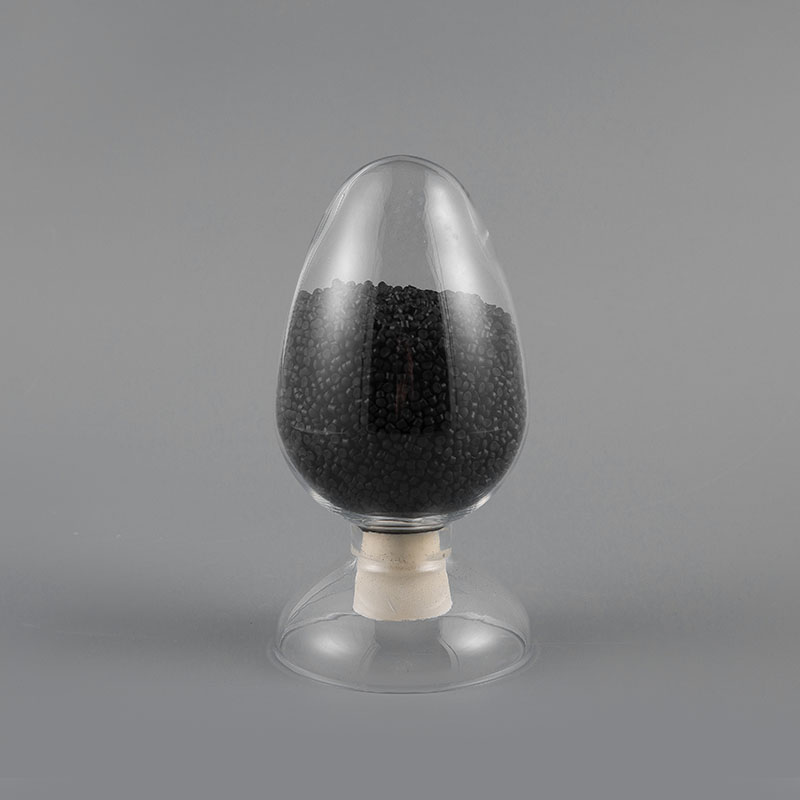 Wholesale ML-H9001G Halogen-Free Low Smoke Oxygen Barrier Inner Sheath Compound We Are China Wholesale ML-H9001G Halogen-Free Low Smoke Oxygen Barrier Inner Sheath Compound Suppliers, Factory, Hangzhou Meilin New Mate...View Product →Wholesale ML-FJ9001/1051/1251 105/125℃ Radiation Cross-Linked Halogen-Free Low SWe Are China Wholesale ML-FJ9001/1051/1251 105/125℃ Radiation Cross-Linked Halogen-Free Low Smoke Insulation Compound Suppliers, Factory,...View Product →Wholesale ML-H9001B1 90℃ Halogen-Free Low Smoke Flame Retardant Class B1 Sheath We Are China Wholesale ML-H9001B1 90℃ Halogen-Free Low Smoke Flame Retardant Class B1 Sheath Compound Suppliers, Factory, Hangzhou Meilin...View Product →
Property Targets That Matter in Real Specifications
Standards set the lower boundary, but real metro tenders go further. From our experience with transit cable projects, the following values appear repeatedly in technical specifications:
- Oxygen index of 32 % minimum for sheaths; some crosslinked formulations target 35 % or higher for extra margin.
- Halogen acid gas content of no more than 0.5 %, pH not below 4.3, and conductivity not above 10 µS/mm when tested to IEC 60754-2.
- Smoke density such that minimum light transmittance reaches 60 % or more per IEC 61034-2; several metro projects tighten this to 70 %.
- Ion chromatography results confirming the absence of fluorine, chlorine, bromine, and iodine rather than a simple pH pass.
- Mechanical minimums in the region of 8–10 MPa tensile strength and 125–150 % elongation at break for a general-purpose 90 °C sheath.
- Low-temperature cold bend testing at -25 °C or lower, often combined with impact testing at -10 °C to cover rough site handling.
These are not universal limits, but they reflect the level of diligence seen in metro tenders. A compound that passes a certificate today can fail tomorrow if the filler dispersion or coupling agent balance drifts. The margin between a good 90 °C LSZH sheath and a barely passing one is often invisible until the smoke density test is run at three times the standard wall thickness. That is why the formulation platform behind the compound matters as much as the final test certificate.
Processing LSZH on the Extrusion Line
LSZH compounds are not a drop-in alternative to PVC. The metal hydroxide fillers used to achieve flame retardancy increase melt viscosity, and water absorption is higher than in unfilled polyolefins. Consistent drying, a screw design that provides gentle mixing without excessive shear, and a die land long enough to stabilize melt pressure are the three practical variables that separate a smooth extruded surface from a rough, shark-skinned one.
Thermoplastic LSZH grades typically run in a lower melt temperature window than PVC and lose mechanical strength if the polymer matrix is thermally degraded during start-up or stoppage. Crosslinkable grades add another control point: silane systems need a temperature profile that avoids premature crosslinking in the barrel, while irradiation-crosslinked products require close coordination between the cable plant and the irradiation facility. Batch-to-batch consistency shows up in the same way. If the compound manufacturer controls filler particle size and coupling chemistry tightly, line operators can hold dimensional tolerances without constant screw-speed corrections. If not, every new delivery becomes a fresh experiment.
What to Verify with the Supplier Before Qualification
Given the stakes, qualification of an LSZH compound for metro use should rely on more than a data sheet. The minimum verification package includes oxygen index, halogen content, smoke density, toxicity index where EN 45545-2 applies, tensile and elongation, thermal ageing, heat shock, cold bend, and oil immersion. In parallel, the customer’s quality team should confirm that the supplier can reproduce those results at production scale.
That is where facilities matter. A compound supplier should be able to run internal compounding trials, control moisture and additive masterbatches, and test physical properties before release. When evaluating potential partners, ask how many automated production lines are in operation, whether the laboratory is dedicated to incoming and outgoing quality control, and how batch traceability is handled. Newly commissioned lines and controlled compounding conditions reduce the risk of micro-batch drift that is difficult to detect later. Capability is easier to judge at the factory than from product certificates, because process discipline becomes visible only when you see the line running. A supplier with dedicated laboratory testing equipment and documented inspection procedures is a safer partner for metro projects than one offering only imported certificates.
Selecting LSZH Compounds for Metro and Subway Applications
Metro and subway cables are safety-critical, physically demanding, and increasingly standardized. The compound that works in a building riser is not automatically suitable for a tunnel: smoke density limits are stricter, toxicity is measured, halogen content is treated as a hazard, and the mechanical environment includes repeated bending, cold installation, oil exposure, and vibration. The reliable approach is to define the hazard level, temperature class, mechanical environment, and cable plant processing capability first, then select a compound family that covers insulation, sheath, and inner protection layers from one consistent material platform.
Hangzhou Meilin has manufactured halogen-free, low-smoke compound systems for more than three decades, running 31 automated production lines across three base facilities. The rail transit product range described here represents the approach we recommend: B1-class LSZH sheaths, oxygen-barrier inner sheaths, and radiation-crosslinked LSZH insulations developed for the narrow safety margins of tunnel operation. If you are specifying for a metro project, ask for a full test report and run a pilot extrusion using your own line conditions. The compound that passes smoke density testing in the manufacturer’s laboratory is the same one you need to reproduce on your line, and the difference is usually found in process discipline rather than in chemistry alone.