
 English
 中文简体
中文简体 русский



Article Directory
- 1 What Is Cable Grade PVC?
- 2 Why Use PVC in Communication Cables?
- 3 How Are PVC Compounds Made for Cable Applications?
- 4 Which PVC Compound Grade Meets Communication Cable Standards?
- 5 Frequently Asked Questions
- 5.1 What is the difference between insulation grade and sheath grade PVC compound?
- 5.2 Can cable grade PVC compounds be used for data cables such as Cat 6A or Cat 7?
- 5.3 How do RoHS-compliant PVC compounds compare in performance to legacy lead-stabilised grades?
- 5.4 What documentation should I request when qualifying a PVC compound supplier?
Specifying the correct PVC compounds for communication cables determines insulation reliability, flame performance, and regulatory clearance across every deployment environment — from structured data cabling inside buildings to buried outdoor telecommunications infrastructure. This guide answers the four questions engineers and procurement teams ask most before finalising a compound specification.
What Is Cable Grade PVC?
Cable grade PVC is a precisely formulated polyvinyl chloride compound engineered to meet the mechanical, thermal, and electrical performance requirements of wire and cable insulation and sheathing. It is not commodity PVC resin — it is a compounded system where base resin accounts for roughly 40 to 60% of the final formulation, with the remainder comprising plasticisers, stabilisers, fillers, flame retardants, and processing aids blended to a controlled specification.
Cable grade PVC compound is a ready-to-process thermoplastic formulation — supplied as pellets or dry blend — that converts directly on an extruder into a dimensionally stable, electrically insulating layer meeting the tensile strength, elongation, volume resistivity, and flame propagation limits defined by the applicable cable construction standard.
The distinction between general-purpose PVC and cable grade material is critical. General-purpose grades are not tested for volume resistivity, low-temperature brittleness, or heat deformation under sustained load — all of which are mandatory pass criteria for communication cable insulation approval.
Why Use PVC in Communication Cables?
PVC compounds dominate communication cable insulation because no other commodity thermoplastic simultaneously delivers electrical insulation, mechanical durability, chemical resistance, flame retardancy, and processability at a competitive price point. The global cable insulation market relies on PVC for more than 40% of total insulation volume, according to industry analysis from Orion Research.
How Are PVC Compounds Made for Cable Applications?
Manufacturing cable grade PVC compounds is a multi-stage batch or continuous process where raw material ratios and mixing parameters directly determine the final compound's electrical and mechanical properties. Deviation at any stage produces a compound that may pass visual inspection but fail electrical certification.
The compound formulation begins at the resin selection stage: suspension-grade PVC resin with a K-value between 65 and 70 is standard for cable applications, balancing melt flow against mechanical strength. K-value outside this window produces either brittle insulation or excessive die swell during extrusion.
- Resin and Additive Weighing PVC resin, plasticisers (typically diisononyl phthalate or DINP), lead-free thermal stabilisers, calcium carbonate filler, and flame retardant additives are weighed to specification tolerances of plus or minus 0.5% per batch. RoHS-compliant formulations substitute calcium-zinc or organic-tin stabilisers for legacy lead systems.
- High-Speed Hot Mixing Components are charged into a high-speed Henschel-type mixer running at 1,000 to 1,500 rpm. Friction raises the blend temperature to 100 to 120 degrees Celsius, at which point plasticiser absorption into the resin is complete and the blend reaches a free-flowing dry state. Mixing time is typically 8 to 12 minutes per batch.
- Cold Mixing and Discharge The hot blend transfers immediately to a cooling mixer running at low speed, dropping temperature below 45 degrees Celsius before discharge. This prevents premature gelation and agglomeration that would cause surface defects in the extruded cable insulation.
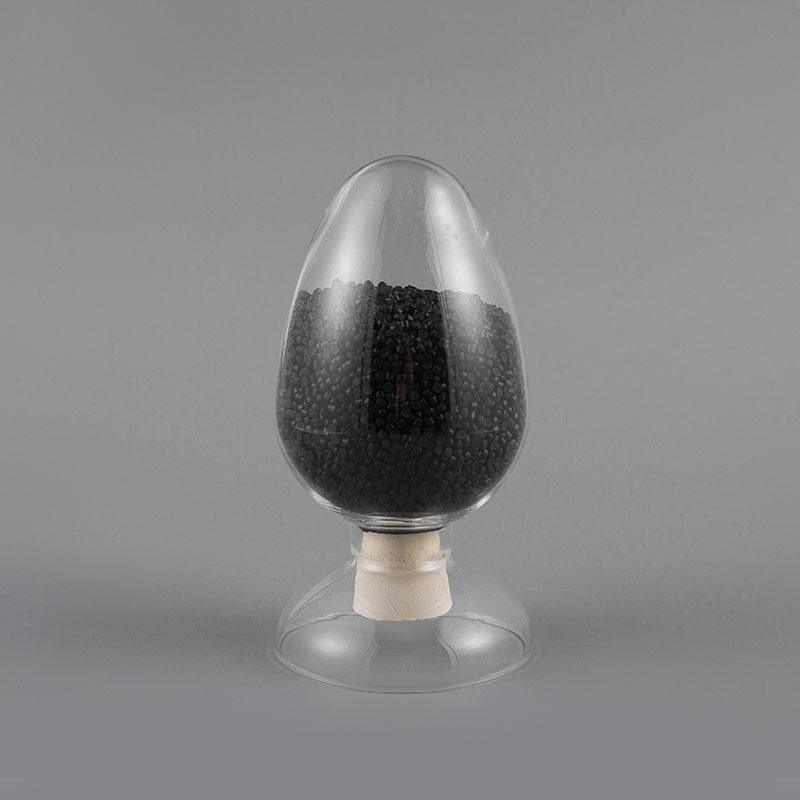
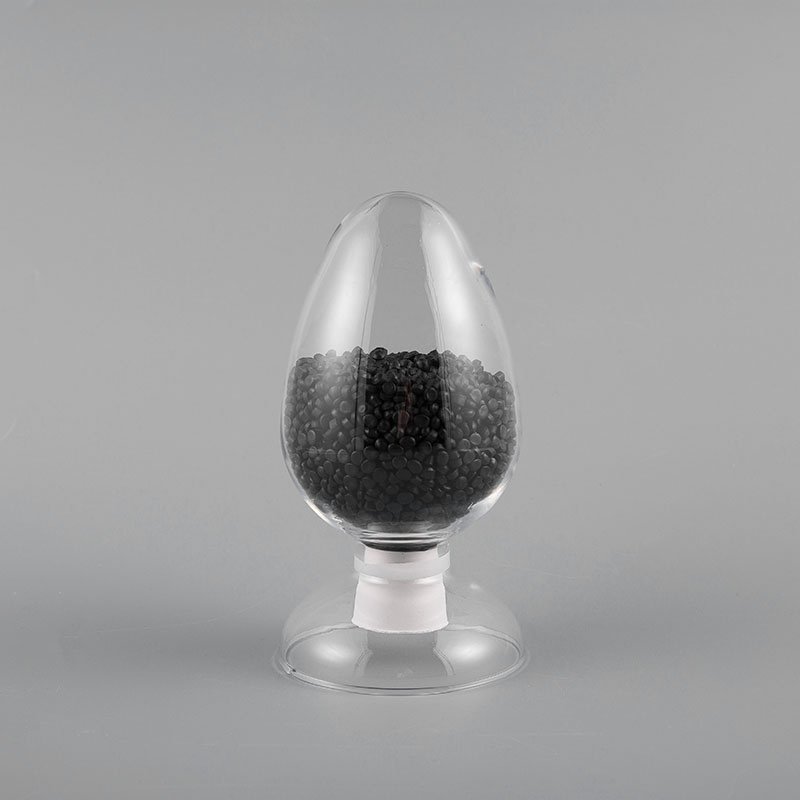
- Pelletising or Dry Blend Packaging For pellet supply, the dry blend passes through a twin-screw compounding extruder with a die-face pelletiser, producing uniform cylindrical or lens-shaped pellets for consistent feed into cable extruders. Dry blend supply skips this step and ships the cooled powder directly, reducing cost but requiring on-site pelletising capability.
Which PVC Compound Grade Meets Communication Cable Standards?
Compliance for PVC compounds for communication cables is defined by a combination of international standards, regional directives, and end-use cable construction specifications. Selecting the wrong grade produces a cable assembly that fails third-party certification testing regardless of insulation appearance or conductor quality.
| Standard | Scope | Key PVC Compound Requirement | Applicable Grade |
| IEC 60502-1 | Power and telecom cables up to 1 kV | Tensile strength 12.5 MPa min, elongation 150% min | TI2 / ST2 insulation grade |
| IEC 60227 | PVC-insulated cables rated 300/500 V | Heat deformation less than 50% at 80 deg C | Type 3 / Type 4 compound |
| UL 83 / UL 1581 | North American building wire and cable | VW-1 flame test pass, oil resistance Class B | UL-listed 105C compound |
| RoHS 2 (2011/65/EU) | EU market restriction on hazardous substances | Lead, cadmium, and hexavalent chromium below 100 ppm | Ca-Zn or organic tin stabilised |
| GB/T 8815 | China national cable PVC compound standard | Volume resistivity 10 to the power of 10 ohm-cm min | PVC/C type series |
For projects requiring simultaneous compliance with multiple standards — common in export-oriented cable manufacturing — request a compound with a documented test report package covering IEC, RoHS, and the relevant regional standard. Compound suppliers with in-house testing laboratories can issue compound-level certificates that simplify cable-level type approval submissions.
Frequently Asked Questions
What is the difference between insulation grade and sheath grade PVC compound?
Insulation grade compounds are formulated for direct contact with conductors and must meet strict volume resistivity and dielectric strength requirements. Sheath grade compounds prioritise abrasion resistance, UV stability for outdoor cables, and impact resistance at low temperatures. The two grades are not interchangeable — using sheath compound as insulation will typically fail electrical certification testing.
Can cable grade PVC compounds be used for data cables such as Cat 6A or Cat 7?
Yes. Flame-retardant cable grade PVC is widely used for Cat 6A insulation and overall sheathing. However, high-frequency data cables above Cat 6A increasingly specify FEP or LSZH materials for lower dielectric loss at 500 MHz to 2 GHz. Confirm the attenuation specification for the target cable category before finalising the insulation compound selection.
How do RoHS-compliant PVC compounds compare in performance to legacy lead-stabilised grades?
Calcium-zinc stabilised compounds meeting RoHS 2 requirements match legacy lead grades in tensile strength, elongation, and heat resistance at 70 and 90-degree Celsius ratings. Processing windows are slightly narrower — calcium-zinc systems are less forgiving of extrusion temperature excursions — but modern compound formulations designed for cable extrusion compensate with processing aid packages that maintain line speed and surface quality.
What documentation should I request when qualifying a PVC compound supplier?
Request the compound test report (CTR) showing tensile strength, elongation, volume resistivity, heat deformation, and low-temperature brittleness results. For RoHS compliance, require an XRF screening report or third-party laboratory certificate confirming restricted substance levels. For UL-listed applications, verify that the compound appears on UL's Yellow Card under the supplier's name before placing production orders.