
 English
 中文简体
 русский




Article Directory
- 1 What a Solar Cable Compound Must Deliver
- 2 UV Resistance: Where Exposed PV Cable Starts to Fail
- 3 Heat Resistance and Crosslinking: The 120 C Conductor Question
- 4 Material Selection for Photovoltaic Cables
- 5 Procurement Checks That Separate Qualified Compounds from Claims
- 6 How Hangzhou Meilin Approaches Photovoltaic Cable Compounds
- 7 Selection Questions That Decide the Specification
A 1,500 V DC photovoltaic (PV) string can remain on a roof, carport or tracker for 25 years. The connector is inspected; the cable jacket is often not. The outer sheath takes the full solar load, the daily thermal cycle and the abrasion from installation. When it chalks or cracks, moisture reaches the insulation and the fault appears as an insulation-resistance failure, not as a visible connector problem.
Solar cable compounds are the formulated polymer systems used for PV cable insulation and sheathing. They must combine UV stabilization, heat aging resistance, flame performance, flexibility and extrusion consistency. The minimum basis for a 25-year specification is a compound qualified to EN 50618:2014 or IEC 62930:2017 with UV and thermal aging data for the exact grade.
Definition: A photovoltaic cable compound is a halogen-free, UV-stabilized polyolefin formulation, usually crosslinked, designed for 1.5 kV DC service and for 90 C continuous conductor temperature with 120 C peaks for 20,000 h under EN 50618:2014.
What a Solar Cable Compound Must Deliver
A photovoltaic cable compound must satisfy three linked requirements at once: UV stability in the jacket, long-term heat resistance in the insulation and consistent processing on the extrusion line. A failure in any one of these shows up later as jacket cracking, insulation deformation or a failed hot-set test.
The insulation and sheath do different jobs. The insulation is the dielectric barrier and must retain electrical strength after thermal aging. The sheath is the environmental barrier and carries most of the UV exposure. Crosslinked halogen-free compounds are used for standard H1Z2Z2-K constructions because they combine low smoke, no halogen and a higher thermal margin than thermoplastic PVC or thermoplastic LSZH.
Reference values: EN 50618:2014 and IEC 62930:2017 for 1.5 kV DC photovoltaic cables.
- UV stabilization that survives direct sun, not only indoor aging.
- Mechanical strength after thermal aging and hot-set testing.
- Compatibility between insulation and sheath so stabilizers do not migrate.
- An extrusion window that holds diameter and concentricity on the line.
UV Resistance: Where Exposed PV Cable Starts to Fail
UV resistance in a solar cable compound is a formulation property, not a color or a one-line marketing claim. A black jacket can still crack if the carbon black grade, dispersion or stabilizer package is wrong.
UV exposure drives photo-oxidation in polyolefins. Chain scission reduces elongation, surface oxidation creates chalking and microcracks, and the cracks grow under thermal cycling. Carbon black absorbs UV and acts as a radical scavenger when it is correctly dispersed. Hindered amine light stabilizers interrupt the oxidation cycle. A PV jacket usually needs both a UV stabilizer system and a carbon black system matched to wall thickness and service environment.
Material check: Request UV aging data from a xenon-arc test to ISO 4892-2, with test duration, irradiance, black-panel temperature and retained tensile strength and elongation. A claim of UV resistance without those parameters cannot be compared with another grade.
For exposed runs, the sheath is the first line of defense. For concealed or conduit runs, UV load is lower, but heat and moisture still act on the compound. The same grade should not be assumed to fit both cases unless the supplier has tested it under both conditions.
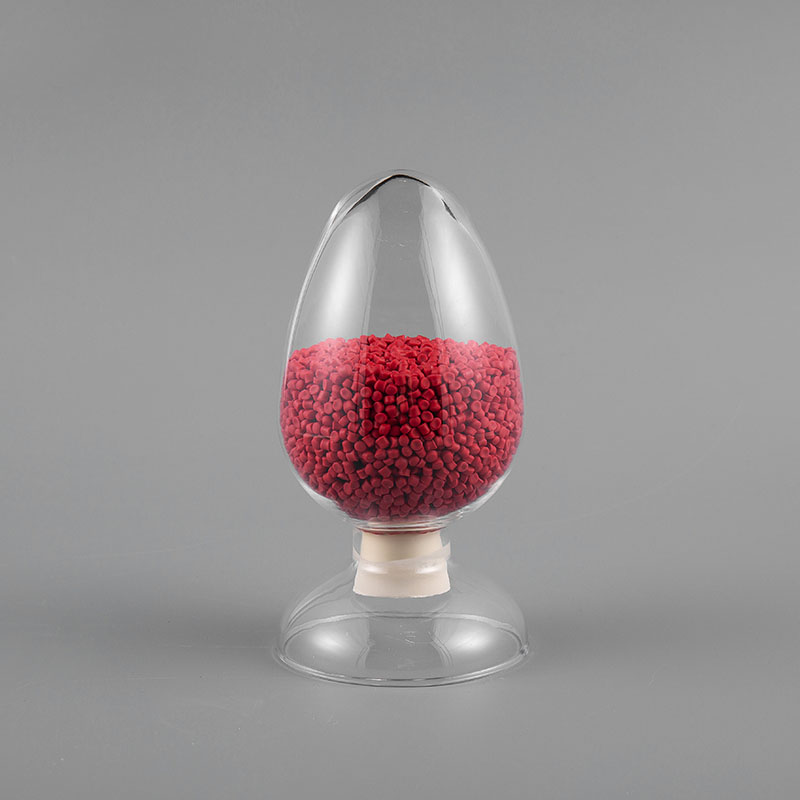 ML-FH125-PV 125°C Halogen-Free PV Sheath/Insulation CompoundThermoplastic HFFR compound for PV insulation and sheathing at 125°C, with UV, ozone and hydrolysis resistance positioned for EN 50618, IEC 62930 and UL 4703.View Product →
The practical rule is simple: the UV package must be qualified on the finished cable construction, not only on a compression-molded plaque. Wall thickness, conductor size and jacket color change the thermal and UV exposure of the compound.
Heat Resistance and Crosslinking: The 120 C Conductor Question
Heat resistance above 90 C is the dividing line between a general LSZH compound and a photovoltaic cable compound. EN 50618:2014 permits a maximum conductor temperature of 120 C for 20,000 h, so a material described only as 90 C rated does not cover the full PV duty.
Crosslinking is how polyolefin compounds reach that thermal class. The polymer chains form a three-dimensional network, which raises deformation resistance and slows thermal aging. The three common routes have different process windows:
- Peroxide crosslinking gives a dense network and is used where the insulation wall and voltage class justify a continuous vulcanization line.
- Silane crosslinking cures by moisture and suits constructions where the cable maker can control humidity and cure time.
- Irradiation crosslinking uses an electron beam and is common for thin-wall PV insulation and sheathing because the dose can be controlled precisely.
The compound datasheet should state the crosslinking route, the hot-set result under EN 60811-507, the tensile and elongation retention after thermal aging, and the maximum conductor temperature. Those four items matter more than a generic 125 C label.
 ML-FJ125-PV Irradiated LSZH Insulation for Solar CablesIrradiated LSZH polyolefin insulation for solar cables; verify crosslinking route and hot-set data alongside its stated TUV 2PfG1169, EN 50618, IEC 62930 and UL 4703.View Product →
For example, an irradiation-crosslinked LSZH grade such as MLFJ125PV is positioned for solar cable insulation at 125 C. The material label does not replace cable qualification; it is the starting point for the construction test.
Material Selection for Photovoltaic Cables
Material selection for photovoltaic cables should start with the cable standard, then move to the exposure profile, the conductor temperature and the fire requirement. Starting with price per kilogram reverses the decision and usually leads to rework on the extrusion line or a failed type test.
Use this sequence before requesting quotations:
- Fix the cable standard and voltage class, for example EN 50618:2014 H1Z2Z2-K or IEC 62930:2017 at 1.5 kV DC.
- Define the installation: direct sun, conduit, tray, floating solar, tracker or rooftop. Record the expected maximum ambient temperature and cable routing.
- Set the conductor temperature and crosslinking method. A 90 C thermoplastic compound does not meet a 120 C peak duty.
- Check fire performance, smoke density, halogen content and project certification. For public buildings, the fire requirement can decide the compound family before UV is considered.
- Run a pre-production extrusion trial. Check surface smoothness, diameter control, hot-set and adhesion between insulation and sheath.
| Material family | UV approach | Thermal position | Typical fit | Main procurement risk |
| PVC, 70 to 105 C | Carbon black or UV stabilizer, grade dependent | Up to 105 C material rating | Protected wiring where halogen-free performance is not required | Not a standard H1Z2Z2-K construction; halogen content and lower thermal margin |
| Thermoplastic LSZH | HALS and carbon black, grade dependent | Usually 90 C continuous | Fixed, protected routes with moderate heat | Deformation risk at high conductor temperature; UV data may be limited |
| Crosslinked LSZH, XLPO | UV-stabilized system designed for exposed cable | 120 C peak for 20,000 h in qualified PV constructions | Exposed PV cable insulation and sheathing | Crosslink density, shelf life and extrusion control |
The table is a screening tool, not a type approval. A PVC compound can be UV stabilized, but it is not the usual route for an EN 50618 H1Z2Z2-K cable. A thermoplastic LSZH compound can suit a protected DC link, but it should not be used where the conductor reaches the 120 C PV peak without test evidence.
Procurement Checks That Separate Qualified Compounds from Claims
A supplier data sheet is not evidence until it states the test method, test duration, specimen condition and pass criterion. Procurement teams should treat UV resistant and 125 C as claims to be verified, not as finished specifications.
Procurement rule: do not release a photovoltaic cable compound for production until the UV aging report, hot-set report and thermal aging report refer to the same grade and the same crosslinking route as the quotation.
Ask for the following documents before a supplier audit:
- A property datasheet with base polymer, crosslinking method, density, tensile strength, elongation at break and volume resistivity.
- UV aging data to ISO 4892-2 with exposure time and retention values for tensile strength and elongation.
- Thermal aging and hot-set data to the EN 60811 series for the exact compound grade.
- Certificate scope for EN 50618:2014 or IEC 62930:2017, including the cable construction covered.
- Batch certificate of analysis with melt flow index, moisture and contamination checks.
- An extrusion trial report from a comparable line, including diameter, surface and adhesion results.
Hangzhou Meilin New Materials Technology Co., Ltd. publishes its laboratory testing equipment as part of its quality evidence. That is useful during a supplier review, but the buyer should still map each test instrument to the specific test clause in the compound specification.
How Hangzhou Meilin Approaches Photovoltaic Cable Compounds
Hangzhou Meilin New Materials Technology Co., Ltd. provides photovoltaic cable compounds through two product routes: irradiation-crosslinked LSZH and silane-crosslinked LSZH. The company was founded in 1994, operates three production sites in Hangzhou, China, and reports 31 automatic production lines across its cable compound operations.
Its PV portfolio includes MLFH125PV for photovoltaic sheathing and MLFJ125PV for photovoltaic insulation, both positioned at 125 C and based on halogen-free low-smoke polyolefin. The company also reports a TUV Rheinland 2PfG 2962 certificate for photovoltaic cable materials in its company news. The certificate is a supplier qualification input; the cable maker must still validate the compound on its own extrusion line and against the finished cable standard.
 ML-FH125-PV Irradiated LSZH Sheath Material for Solar CablesIrradiated low-smoke halogen-free polyolefin sheath with density 1.43 g/cm³, stated to meet TUV 2PfG1169, EN 50618, IEC 62930 and UL 4703 for solar cable sheaths.View Product →
For a PV cable project, the useful comparison is not a single price per kilogram. It is the cost of the qualified compound, extrusion yield, startup scrap, rework risk from hot-set failure and the lifetime cost of a jacket that cracks before the system warranty ends.
Selection Questions That Decide the Specification
The questions below decide whether a compound is qualified for a specific photovoltaic cable construction.
What UV test evidence should a solar cable compound supplier provide?
Request xenon-arc aging data to ISO 4892-2 with exposure duration, irradiance, black-panel temperature and retained tensile strength and elongation. A result without those parameters cannot be compared across grades, and a UV claim on a datasheet alone is not sufficient for an exposed PV cable.
Can a 90 C compound be used where the conductor reaches 120 C?
No. EN 50618:2014 allows a 120 C conductor peak for 20,000 h, while a 90 C thermoplastic compound is qualified for a lower continuous temperature. Use a crosslinked compound with hot-set and thermal aging data for the 120 C duty, and confirm the finished cable passes the standard.
Is thermoplastic LSZH ever acceptable for photovoltaic cables?
It can be acceptable in protected, fixed routes where conductor temperature stays within the 90 C class and the cable standard permits it. It is not the default choice for exposed PV cable at 1.5 kV DC, where crosslinked LSZH is used to meet UV and 120 C peak requirements.
What is the first document to check in a supplier audit?
Start with the grade-specific datasheet and certificate scope, then match both to the batch certificate of analysis. The datasheet must state base polymer, crosslinking method, UV test method and thermal class; the certificate must cover the actual cable construction and standard.