
 English
 中文简体
中文简体 русский



Article Directory
- 1 The LSZH Formulation Framework: Where Additives Act
- 2 Metal Hydroxide Fillers: The Primary Flame Retardant Engine
- 3 Synergists: Less Smoke, Stronger Char
- 4 Coupling Agents and Filler Dispersion: Invisible but Decisive
- 5 Processing Aids and Lubricants: Keeping Extrusion Under Control
- 6 Antioxidants and Stabilizers: Protecting the Compound Over Decades
- 7 Beyond Fire: Functional Additives for Real Service Conditions
- 8 What This Means for Compound Selection
A cable producer qualified an LSZH jacket compound for a rail project and watched the extrusion surface turn rough within the first hour of production. Another buyer saw the same compound pass the cone calorimeter test in the laboratory, only to fail the tensile retention requirement after heat aging. Both problems trace back to the same root cause: additives. In a low-smoke halogen-free (LSZH) compound, the hydroxide filler loading, the choice of synergists, the quality of coupling agents, and the selection of processing aids decide far more than a data sheet reveals. When the additive package is right, the compound delivers consistent flame retardancy, moderate smoke, smooth extrusion, and stable long-term mechanics. When it is wrong, no amount of base resin selection will save the cable.
The LSZH Formulation Framework: Where Additives Act
An LSZH compound is not simply polyolefin with flame retardant sprinkled in. A workable formulation contains four functional blocks: a polyolefin base, metal hydroxide flame retardants, a group of synergists and stabilizers, and process-oriented additives. The base polymer provides the matrix; every other component modifies how the material burns, smokes, flows, and ages. For cable producers, the practical question is which additive choices matter most for the intended application.
| Additive family | Typical loading | Primary function |
|---|---|---|
| Metal hydroxides (ATH, MDH) | 50–65% of total formulation weight | Endothermic decomposition, fuel dilution, smoke suppression |
| Synergists (zinc borate, tin compounds) | 2–10 phr | Char reinforcement, reduced smoke density and corrosivity |
| Coupling agents (silanes, fatty-acid derivatives) | 0.5–2% of filler weight | Filler-polymer bonding, dispersion stability, mechanical retention |
| Processing aids and lubricants | 1–5 phr | Lower melt friction, smoother extrusion surface, reduced torque |
| Antioxidants and metal deactivators | 0.2–1.5 phr | Long-term thermal stability, protection against copper-catalyzed oxidation |
Each family influences the others. More hydroxide filler raises flame retardancy but demands a stronger coupling system and a more careful lubricant balance. The formulation is therefore a compromise, and the compromise must fit both the fire standard and the extrusion line.
Metal Hydroxide Fillers: The Primary Flame Retardant Engine
Aluminium trihydroxide (ATH) and magnesium dihydroxide (MDH) are the workhorses of LSZH flame retardancy. Both decompose endothermically at elevated temperatures, release water vapour, and leave an inorganic residue that dilutes combustible gases. ATH begins to decompose at roughly 180–200°C, which makes it suitable for low-temperature processing but limits its use in high-temperature grades and crosslinked systems. MDH decomposes at about 330°C, which is why irradiation-crosslinked and high-temperature LSZH grades rely on it.
ATH vs MDH: Matching the hydroxide to the process
The choice between ATH and MDH is driven by processing and service temperatures. Silane-crosslinkable and irradiation-crosslinked compounds reach temperatures well above 200°C during processing, so ATH would release water prematurely and create voids. MDH tolerates those conditions. For thermoplastic compounds processed below 190°C, ATH remains the more cost-effective option. The decomposition temperature also changes the fire behaviour: MDH acts later in a fire than ATH, which shifts the heat-release curve.
Loading is the dominant variable. In a typical LSZH sheath compound, hydroxide filler accounts for more than half of the total formulation weight. At loadings of 50–60 wt%, the limiting oxygen index (LOI) climbs to 35–45% and the halogen content drops to near zero. At the same time, tensile strength and elongation at break fall. The compound becomes stiffer, more brittle, and harder to extrude. This is the central trade-off in LSZH compounding: every point of flame retardancy gained from filler loading costs a measurable amount of ductility.
| Property | Lower loading (~45 wt%) | Higher loading (~60 wt%) |
|---|---|---|
| Limiting oxygen index | 32–35% | 38–45% |
| Tensile strength | 12–15 MPa | 9–12 MPa |
| Elongation at break | 180–250% | 90–140% |
| Smoke density (maximum value) | Higher | Lower |
| Extrusion behaviour | Manageable torque, wider window | Higher torque, narrower window |
The trade-off is not linear. Pushing the filler loading from 45 to 60 wt% buys meaningful flame retardancy but roughly halves the elongation at break and narrows the processing window. A well-balanced additive package pulls the curve in the right direction.
For applications that require a B1 fire rating, a compound designed around a high-performance hydroxide system, such as our B1-grade LSZH sheath compound, keeps LOI high while preserving the surface quality and flexibility expected from a modern jacket material.
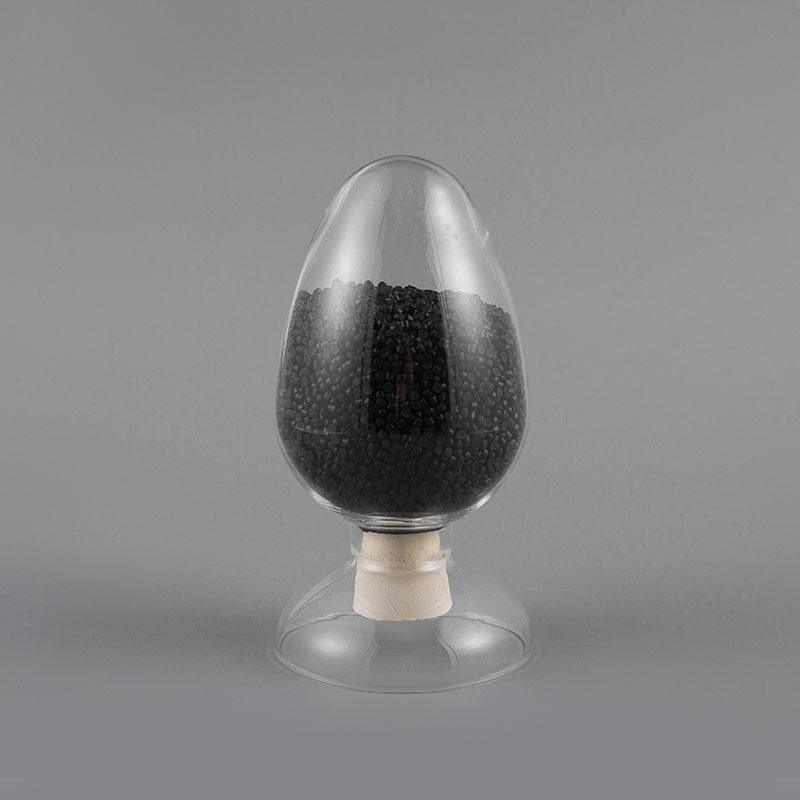
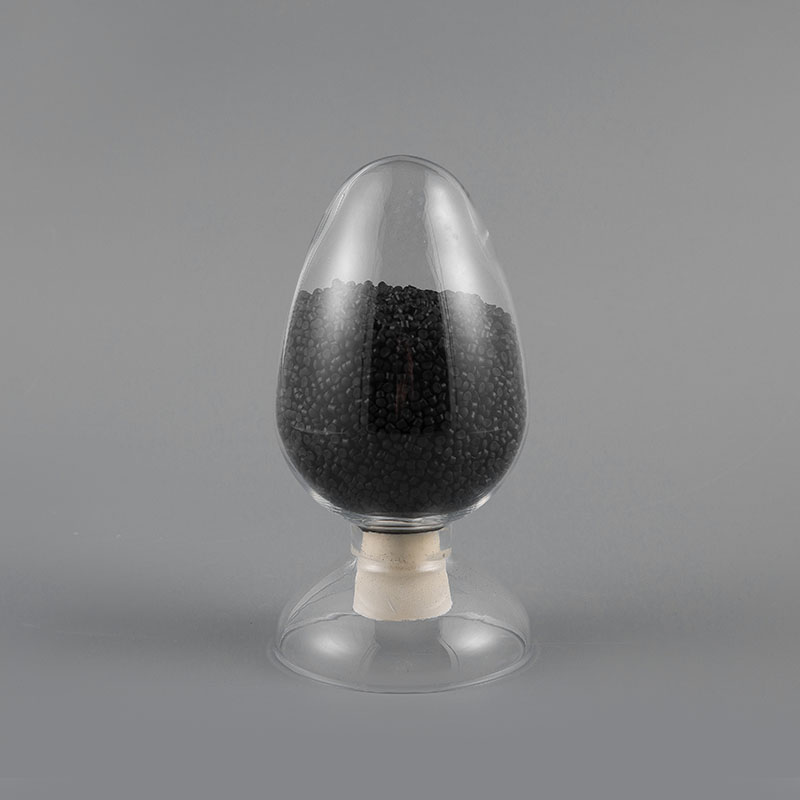 Wholesale ML-H9001B1 Thermoplastic LSZH flame- retardant B1 grade sheath materiaWe Are China Wholesale ML-H9001B1 Thermoplastic LSZH flame- retardant B1 grade sheath material Suppliers, Factory, Hangzhou Meilin New Ma...View Product →
Synergists: Less Smoke, Stronger Char
Hydroxides suppress flame, but they do not automatically deliver the low smoke density and low corrosivity that LSZH standards demand. Synergists such as zinc borate, tin-based additives, and certain nanoclays work alongside the hydroxide filler. Zinc borate promotes a stable, expanded char layer that shields the polymer beneath and reduces smoke generation. Tin compounds have been studied for decades for their ability to reduce smoke even at lower hydroxide loadings, although the effect depends heavily on the polymer matrix and on dispersion quality.
When evaluating a compound, look beyond the oxygen index. Smoke density, smoke toxicity, and corrosivity are assessed under specific protocols used in railway, marine, and building applications, and the synergist package determines how a compound performs in those tests. A formulation with a good LOI can still fail if its smoke or corrosivity values are out of specification.
Understanding how smoke toxicity and corrosivity are measured for LSZH cables helps buyers interpret fire-safety certificates with more confidence.
Coupling Agents and Filler Dispersion: Invisible but Decisive
A hydroxide filler with poor surface treatment behaves like sand in the polymer: it agglomerates, creates stress concentration points, and causes premature cracking. Coupling agents, usually silanes or fatty-acid derivatives, bridge the inorganic filler and the organic matrix. The results are higher tensile strength, better elongation retention, lower moisture uptake, and a more uniform microstructure that also improves electrical properties.
Dispersion is where many compounds fail in practice. Poorly dispersed fillers produce rough surfaces, die build-up, and inconsistent mechanical properties along the cable length. The problem rarely appears on a data sheet but shows up immediately on the production line. Compounds with well-dispersed fillers run cleaner, tolerate a wider extrusion window, and deliver cables with more consistent wall thickness and surface finish. The link between filler dispersion and extrusion behaviour is a recurring theme in LSZH processing because it connects raw material quality to field performance.
For insulation applications, where voids and agglomerates risk dielectric failure, a 90°C LSZH insulation compound with a well-dispersed additive system provides the mechanical and electrical consistency that thin-wall insulation requires.
Wholesale ML-J9001 90℃ Halogen-Free Low Smoke Flame Retardant Insulation CompounWe Are China Wholesale ML-J9001 90℃ Halogen-Free Low Smoke Flame Retardant Insulation Compound Suppliers, Factory, Hangzhou Meilin New Ma...View Product →Processing Aids and Lubricants: Keeping Extrusion Under Control
LSZH compounds are shear-sensitive and have a narrower processing window than PVC. Without adequate lubrication, the melt sticks to the screw and barrel, generates high frictional heat, and produces a rough shark-skin surface. Internal lubricants reduce melt viscosity, while external lubricants reduce friction between the melt and the metal surfaces. Dosage must be tuned carefully: too little leads to high torque and poor surface finish; too much migrates to the surface, affects printability, and weakens the bond between insulation and jacket.
Moisture management sits at the interface between additive technology and production practice. Because hydroxide fillers are hydrophilic, a compound that has absorbed moisture during storage will produce porous, splay-marked surfaces. The extruder operator should follow the compound supplier's drying recommendations, and the compound itself needs packaging that keeps moisture pickup low during transport and storage.
Antioxidants and Stabilizers: Protecting the Compound Over Decades
Cables are expected to remain serviceable for 20 to 30 years. LSZH materials face two ageing challenges: thermal oxidation of the polyolefin matrix and catalytic degradation caused by copper in contact with the conductor. Antioxidants slow radical chain reactions, while copper deactivators complex with metal ions so they cannot catalyse oxidation. Without a balanced stabilizer package, an LSZH insulation loses elongation at break quickly and fails the thermal ageing requirements of standards such as IEC 60811 or UL 1581.
Copper contact demands more than a standard antioxidant
Insulation compounds sit directly against copper conductors, so the stabilizer system must include copper deactivators, not just radical scavengers. Otherwise, the service life of the cable collapses even when the base polymer is well chosen. This is one reason why the long-term mechanical and electrical specifications of LSZH compounds deserve as much attention as their fresh values.
Long-term performance is not visible in the fire test. Buyers should ask for aged mechanical data, not just fresh tensile numbers, when comparing compounds for projects with long design lives.
Beyond Fire: Functional Additives for Real Service Conditions
Service environments add further demands. A cable in an oil-rich area needs an LSZH jacket with oil-resistance modifiers. A cable installed outdoors needs UV stabilisers. A cable running in cold climates needs low-temperature flexibility, which is difficult to achieve when the compound is heavily filled. These functional requirements are handled through the additive package, not through the base polymer alone.
Our oil-resistant LSZH sheath compound is one example of a formulation where the hydroxide flame retardant system is combined with a compatibility package to keep the jacket flexible and crack-free in the presence of lubricants and fuels.
Wholesale ML-H9001C-N Thermoplastic LSZH flame- retardant and oil-resistant sheaWe Are China Wholesale ML-H9001C-N Thermoplastic LSZH flame- retardant and oil-resistant sheath material Suppliers, Factory, Hangzhou Mei...View Product →What This Means for Compound Selection
For buyers who specify LSZH compounds, the practical conclusions are straightforward:
- Compare LOI together with smoke density and corrosivity rather than as isolated figures.
- Match the hydroxide decomposition temperature to the processing and service temperature of the cable.
- Run a production trial before final approval and watch for surface roughness, die build-up, and torque stability.
- Ask for aged mechanical data, especially elongation retention after thermal ageing.
- Confirm the additive system matches the service environment, including oil, UV, and low-temperature conditions.
The additives in an LSZH compound are the difference between a material that merely carries a halogen-free label and one that performs reliably in a fire, survives decades of service, and runs smoothly on the production line. With three decades of cable material experience and in-house laboratory testing, we formulate LSZH compounds for building, communication, power, transport, and energy cables, sharing the reasoning behind each formula rather than just a data sheet. That transparency is the real indicator of compound quality.