
 English
 中文简体
中文简体 русский



Article Directory
- 1 The Marine Fire Scenario That Drives Material Selection
- 2 What LSZH Chemistry Actually Does in a Fire
- 3 Standards and Test Regimes for Marine Cable Compounds
- 4 Thermoplastic or Crosslinked: The First Specification Decision
- 5 Beyond Fire: What a Marine Compound Must Survive
- 6 A Practical Sequence for Specifying Marine LSZH Compounds
- 7 Marine-Grade LSZH Products for Cable Manufacturers
- 8 Quality Control and Batch-to-Batch Consistency
- 9 Conclusion
The Marine Fire Scenario That Drives Material Selection
A fire on board a vessel is fundamentally different from a fire in a building. There is no street to walk to, no lobby to empty, no fresh air within reach. By the time a fire is detected in a machinery space or an accommodation corridor, the crew's survival depends on visibility, breathable air, and the time available before the corridor becomes impassable.
Cable installations are among the first items to ignite and the most likely to sustain combustion in a shipboard fire. Hundreds of metres of power, control and instrumentation cables run through every compartment, and the compound that insulates and sheaths them determines how quickly flame propagates, how dense the smoke becomes, and which gases the fire releases.
Traditional PVC compounds emit hydrogen chloride, thick black smoke and heavy soot when they burn. In an enclosed marine space, that combination can block an escape route within minutes and cause respiratory damage long before flame reaches the crew. Low smoke zero halogen (LSZH) compounds for marine transportation cables exist to change that outcome. By replacing halogenated polymer systems with polyolefin-based chemistry and inorganic flame retardants, they cut smoke generation dramatically and eliminate the release of corrosive halogen acids. That is why modern shipbuilding specifications, classification society rules and international conventions increasingly require LSZH rather than PVC for marine cables.
What LSZH Chemistry Actually Does in a Fire
The mechanism matters because it changes how you should read supplier data. In a halogen-containing polymer, flame retardance historically came from chlorine-based radicals interfering with combustion in the gas phase; the trade-off was dense smoke and acid gas. LSZH compounds take a different route. They use halogen-free polyolefin resins with high loadings of inorganic fillers such as aluminium hydroxide or magnesium hydroxide. When heated, these fillers decompose endothermically, absorbing heat, releasing water vapour and leaving behind a stable char layer that limits oxygen access and reduces dripping.
The measured difference is substantial. Under IEC 61034, an LSZH sheath compound typically achieves light transmittance of 60% or more in a 3 m³ smoke chamber, while conventional PVC compounds often fall below 20%. Under IEC 60754, halogen acid gas content drops from hundreds of milligrams per gram to under 5 mg/g. For a vessel's crew, these numbers translate into visible exit paths and breathable air during the critical first minutes of a fire.
Standards and Test Regimes for Marine Cable Compounds
Material selection starts with the test regime because the tests define what a compound must prove before a classification society will accept the cable.
| Standard | Requirement | Why it matters for marine installations |
|---|---|---|
| IEC 60332-1-2 | Single-cable flame propagation | A vertical cable run must not carry flame along its own length |
| IEC 60332-3-22/23/24 | Bunched-cable flame spread | Cables grouped on a tray must not ignite the whole bundle |
| IEC 61034-1/2 | Smoke density in a 3 m³ chamber | Smoke must stay thin enough for crew to find an exit |
| IEC 60754-1/2 | Halogen acid gas content | Limits corrosive gases that damage lungs, electronics and structure |
| EN 45545-2 R15/R16 | Flame, smoke and toxicity by hazard level | Applies where multi-modal or rail-ferry specifications demand it |
Beyond the IEC series, the IMO FTP Code Part 9 and classification society rules from ABS, DNV, Lloyd's Register and CCS govern final shipboard certification. A dedicated guide to LSZH transportation cable standards explains how the different test pathways are applied in practice.
Thermoplastic or Crosslinked: The First Specification Decision
Within the LSZH family, the first decision is whether to use a thermoplastic grade or a crosslinked grade. The two behave differently under overload, high ambient temperature and mechanical abuse.
Thermoplastic LSZH Compounds
Thermoplastic LSZH compounds are extruded, cooled and ready to use without any post-processing step. They offer faster production, easier screw cleaning and lower cost per kilogram. For general lighting, communication and control circuits without severe overload conditions, thermoplastic LSZH delivers adequate fire performance at a predictable cost, and it remains the most widely used family for interior ship wiring.
Irradiation-Crosslinked LSZH Compounds
Irradiation-crosslinked LSZH, often called XL-LSZH or XLPO, is exposed to an electron beam after extrusion to create a three-dimensional network between polymer chains. That changes behaviour at high temperature. A thermoplastic sheath may begin to soften and deform at 105 °C, while a crosslinked sheath retains its shape and mechanical strength at short-circuit temperatures above 200 °C.
In engine rooms, where cables sit in elevated ambient heat and carry fluctuating motor loads, crosslinked LSZH is increasingly the default. The mechanical integrity of crosslinked transportation cable compounds under heat, vibration and thermal cycling is a key reason they are specified for marine power circuits.
Beyond Fire: What a Marine Compound Must Survive
Fire safety is the entry criterion, but a marine cable compound also has to withstand years of salt water, humidity, oil, vibration and temperature extremes. Three environmental axes deserve attention during evaluation.
Oil and Fuel Resistance
Cables routed through engine rooms are surrounded by lubricating oil, hydraulic fluid and occasionally fuel. LSZH compounds formulated with elastomeric modifiers can pass elevated-temperature immersion tests with limited loss of tensile strength. Dimensional stability after cooling matters too, because the cable remains energised while the vessel pitches and the engine vibrates.
Cold Flexibility
On exposed decks, particularly in vessels that operate in northern latitudes, the sheath must survive −40 °C bending without cracking. Because most LSZH formulations contain no plasticisers, achieving that flexibility is a genuine formulation challenge, and not every supplier's grade passes at low temperature.
UV and Weather Resistance
Deck cable runs and yard storage expose the compound to sunlight for months before a vessel is launched. Without carbon black or a proper UV stabiliser package, the sheath surface will embrittle and crack. A marine-grade compound should include that protection as standard, not as an optional extra.
These factors are treated in more depth in our review of oil, fuel and weather resistance in LSZH cable compounds.
A Practical Sequence for Specifying Marine LSZH Compounds
When a cable manufacturer starts a marine cable development project, the material selection process typically follows seven steps:
- Identify the governing cable standard (IEC 60092-353 for power and control; IEC 60092-376 for communication circuits).
- Define the continuous rated temperature, typically 90 °C, with 105 °C or 125 °C for engine room and high-ambient locations.
- Determine the flame-propagation class (Class A, B or C under IEC 60332-3) that the target vessel type demands.
- Confirm smoke density and acid gas limits from the classification society rule.
- Choose thermoplastic or crosslinked LSZH based on overload risk and route environment.
- Check oil, fuel and cold-flexibility requirements against the compound's data sheet.
- Certify the compound batch against the specific cable construction and document traceability.
Marine-Grade LSZH Products for Cable Manufacturers
For cable manufacturers developing or extending a marine product line, the compound choice should be supported by documented fire, mechanical and thermal data. The following LSZH grades are specifically designed for marine cable sheathing.
For engine-room cables and other high-demand routes, the radiation-crosslinked halogen-free low-smoke flame-retardant sheath compound combines high-temperature stability, oil resistance and mechanical strength in one extrusion step.
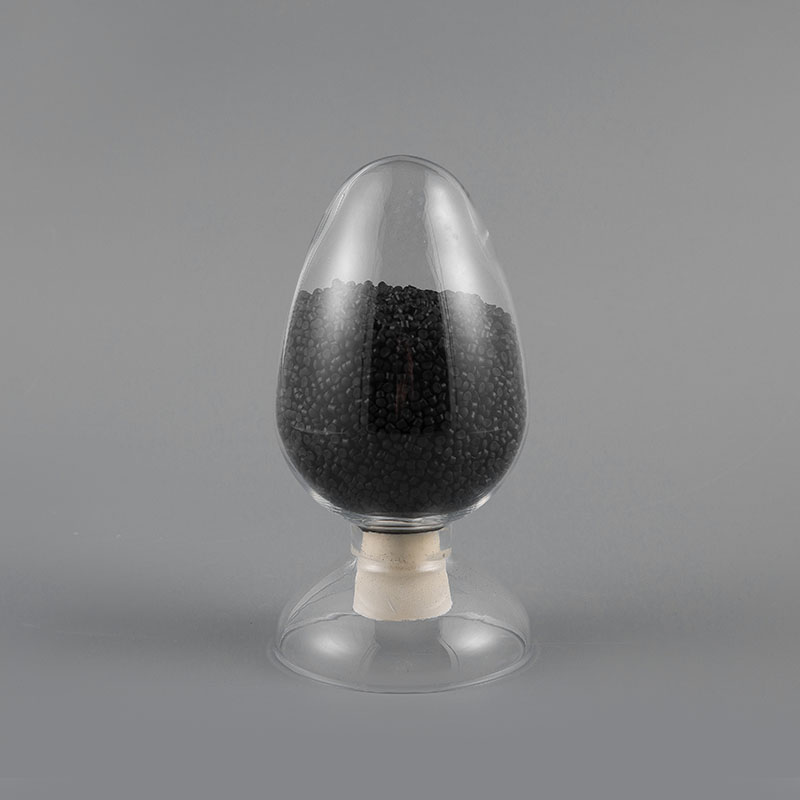 Wholesale ML-FH9001 90℃ Radiation Cross-Linked Halogen-Free Low Smoke Flame RetaWe Are China Wholesale ML-FH9001 90℃ Radiation Cross-Linked Halogen-Free Low Smoke Flame Retardant Sheath Compound Suppliers, Factory, Ha...View Product →
Where a thermoplastic, process-friendly grade is preferred and Class B flame performance is acceptable, the halogen-free low-smoke flame-retardant Class B sheath compound balances extrusion output with marine fire-safety requirements.
Wholesale ML-H9001B 90℃ Halogen-Free Low Smoke Flame Retardant Class B Sheath CoWe Are China Wholesale ML-H9001B 90℃ Halogen-Free Low Smoke Flame Retardant Class B Sheath Compound Suppliers, Factory, Hangzhou Meilin N...View Product →
For vessels that specify a 105 °C rated cable, the 105 °C irradiated halogen-free flame-retardant marine sheath material extends the service-temperature envelope without sacrificing low-smoke, zero-halogen performance.
Wholesale ML-FH1052 105℃ irradiated halogen- free flame-retardant sheath materiaWe Are China Wholesale ML-FH1052 105℃ irradiated halogen- free flame-retardant sheath material for marine cables Suppliers, Factory, Hang...View Product →
All three grades are produced on automated lines and tested for mechanical, electrical and fire properties before shipment, which is what a classification society submission requires.
Quality Control and Batch-to-Batch Consistency
A marine cable compound must perform identically from delivery to delivery, because a type-approved cable is only as good as the material actually used in each production run. Three parameters have the greatest influence on fire performance: filler dispersion, moisture content and crosslinking consistency.
Badly dispersed aluminium hydroxide creates weak points in the char and produces inconsistent smoke test results. Moisture above roughly 0.2% degrades the extrusion surface and reduces flame retardance. For crosslinked grades, the degree of crosslinking must be checked by gel content, typically at 60% or higher, to guarantee the thermal data on the datasheet.
Our laboratory testing equipment verifies fire, mechanical and electrical properties before material leaves the factory, and every batch is traceable to production parameters. For a cable manufacturer, that traceability is the foundation of a credible type-approval file.
Conclusion
LSZH compounds for marine transportation cables are no longer a niche product. They are a safety-critical component of modern shipbuilding, required by international conventions and classification society rules, and chosen because they give crews more time to escape and more visibility to find an exit. The selection decision comes down to thermoplastic versus crosslinked, rated temperature, flame-propagation class, and the oil or cold resistance appropriate to the cable route. Work with a compound supplier whose process control can reproduce the documented performance on every batch, and whose testing depth can support your type-approval effort from start to finish.