
 English
 中文简体
中文简体 русский



Article Directory
When a 90-degree B1-grade LSZH sheath compound arrives at a cable plant, the first check a quality engineer should make is the batch-to-batch oxygen index, not the certificate. A compound that drifts from 34 percent to 38 percent LOI may still match its own datasheet, yet it can change the CPR classification of the finished building wire. That is why low smoke zero halogen (LSZH) compound quality is decided upstream, inside the supplier's raw material silos, compounding lines, and aging ovens, long before the certificate is printed.
What Quality Means in an LSZH Compound
Quality in an LSZH compound is a measurable set of interlocking properties: flame retardancy, smoke generation, halogen acid emission, mechanical strength, and thermal aging, and all of these must stay stable from one production batch to the next.
An LSZH compound is a flame-retardant polyolefin material, usually based on polyethylene or EVA copolymers, that contains no halogen atoms in its formulation and relies on hydrated mineral fillers such as aluminum hydroxide (ATH) and magnesium hydroxide to achieve flame retardancy. Because the flame-retardant mechanism is endothermic water release, quality control must protect the filler loading and the filler-polymer interface at every stage.
Working definition
LSZH grade quality is the repeatable combination of a minimum oxygen index, a maximum smoke density, a maximum acid gas level, minimum tensile and elongation values, and a verified thermal aging performance, all produced under a documented quality system.
Five properties dominate the buyer's acceptance criteria, and each has a standard test behind it.
| Property | Test method | Typical LSZH value |
| Oxygen index | ISO 4589-2 | 32 percent minimum |
| Halogen acid gas | IEC 60754-1 / -2 | pH above 4.3, conductivity below 10 microsiemens per mm |
| Smoke transmittance | IEC 61034-2 | 60 percent minimum |
| Tensile strength | IEC 60811-501 | 10 MPa minimum |
| Elongation at break | IEC 60811-501 | 150 percent minimum |
| Thermal aging | IEC 60811-401 | 70 to 80 percent retention after aging at rated temperature |
Producers such as Hangzhou Meilin New Materials Technology Co., Ltd., a cable compound manufacturer running three plants and 31 automated production lines, classify LSZH grades by temperature class and flame rating so a buyer can match the compound to the cable standard before the first trial run.
One property dominates LSZH procurement decisions: oxygen index. A commercial LSZH grade sold for power or communication cables should hold a minimum oxygen index of 32 percent, while B1-rated building-wire compounds normally sit between 36 and 38 percent.
Raw Material Incoming Control
Raw material control drives 60 to 70 percent of final compound performance, because in a halogen-free formulation, flame retardancy comes from the mineral filler, not from halogen chemistry.
Aluminum trihydroxide releases water when it decomposes above 180 degrees, cooling the pyrolysis zone and diluting combustible gases. A typical thermoplastic LSZH formula carries a 50 to 65 percent ATH loading. At that level, the moisture, particle size, purity, and surface treatment of the filler decide whether the compound extrudes cleanly and keeps its mechanical integrity.
- Incoming ATH moisture checked below 0.3 percent; wet filler creates steam voids and surface streaks on the cable sheath.
- Particle size checked around a D50 of 1 to 2 micrometers; coarse fractions act as crack initiators.
- Lot certificates reviewed for purity and metal content before material moves to the silo.
- Retained samples kept for every incoming lot so a later failure can be traced to its source.
A 55 percent ATH loading delivers a practical oxygen index of about 35 percent. Reduce that loading to 30 percent, and the same polymer base will not reach 28 percent, which is below the LSZH threshold.
Compounding Process Control
The compounding line decides whether a validated formula survives contact with production, because ATH at 50 percent loading wants to agglomerate, and every deviation in shear, temperature, or residence time writes a defect into the pellet.
Thermoplastic LSZH compounds are typically produced on twin-screw compounding lines with temperature zones in the 150 to 190 degree range. The upper limit matters: ATH begins to lose water near 200 degrees, so an overheated zone permanently damages flame retardancy before the pellet is formed. Melt filtration removes gels and agglomerates, and the pellets are dried to below 0.2 percent moisture.
Poor filler dispersion in LSZH compounding is the most common hidden defect. It does not appear in a certificate; it appears later as pinholes, die build-up, or a sudden drop in elongation at break on the cable maker's own extrusion line.
Inspection point: a dispersion failure can reduce elongation at break from 180 percent to below 120 percent in a single extrusion pass, with no change in the compound grade name or the certificate values.
Laboratory Verification and Release Testing
Every trustworthy LSZH manufacturer runs two layers of testing: fast routine tests on every batch, and full type tests whenever the formulation, the raw material source, or the production line changes.
Routine release testing on each batch covers oxygen index, density, tensile strength, elongation at break, moisture, and melt flow. Type testing adds smoke density, acid gas emission, thermal aging at 100 to 135 degrees, and electrical properties including volume resistivity. A manufacturer that cannot run these tests internally should not claim quality control, because those tests are what separate a pellet supplier from a compound engineer. Meilin documents this capability with its in-house laboratory testing equipment, located alongside the workshop and production facilities at the company's Lin'an bases.
Routine test on every batch
- Oxygen index
- Tensile strength and elongation
- Density and moisture
- Melt flow index
Type test on any change
- Smoke density (IEC 61034-2)
- Halogen acid gas (IEC 60754)
- Thermal aging at 100 to 135 degrees
- Electrical and CPR-related properties
As an example, Meilin releases its thermoplastic LSZH sheath compound for communication cables only after the oxygen index, smoke, and mechanical checks pass the release limits defined for that grade.
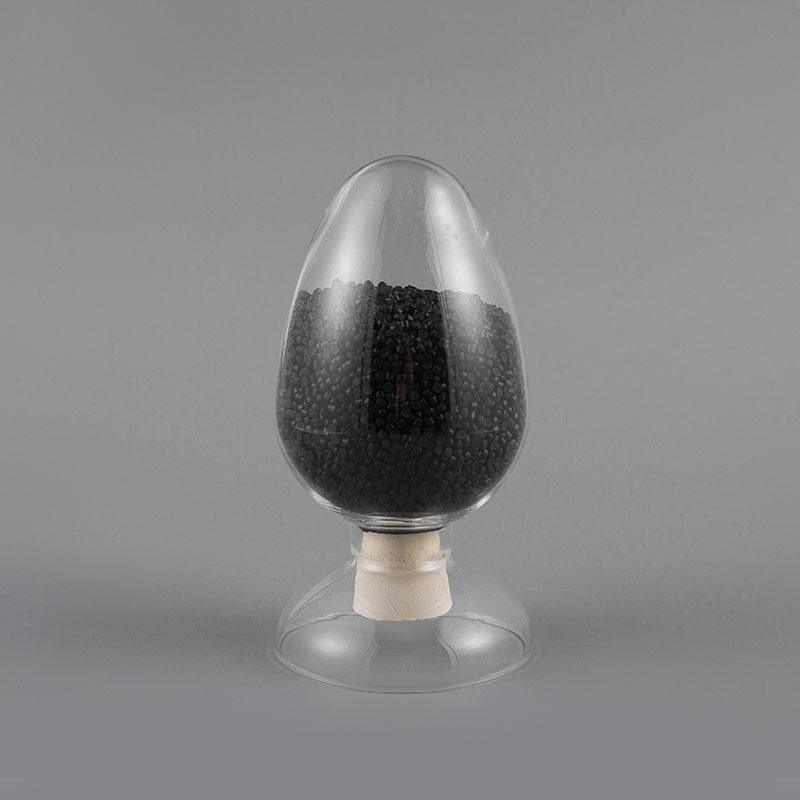
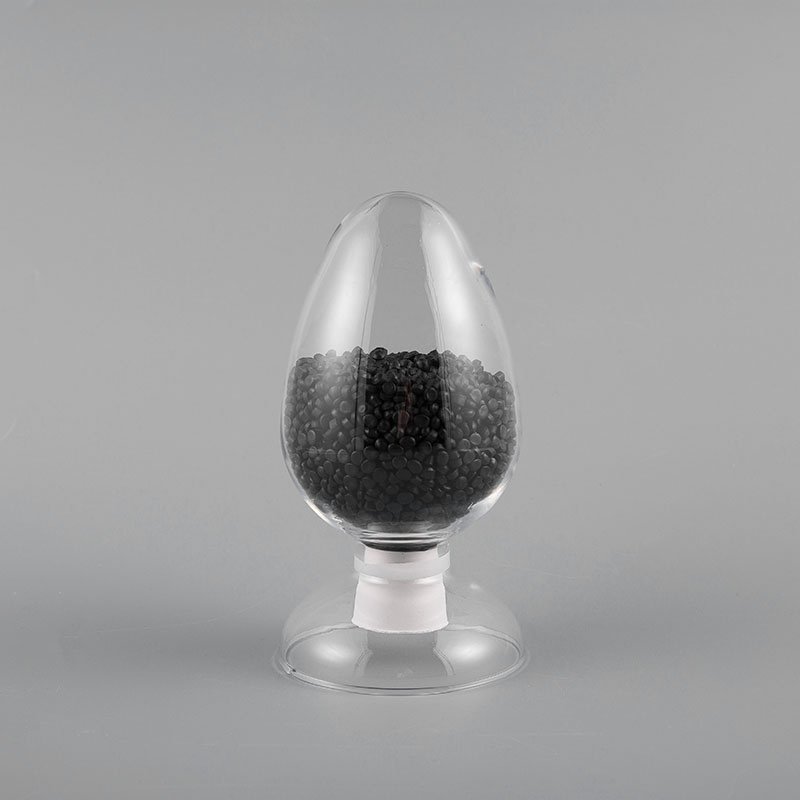
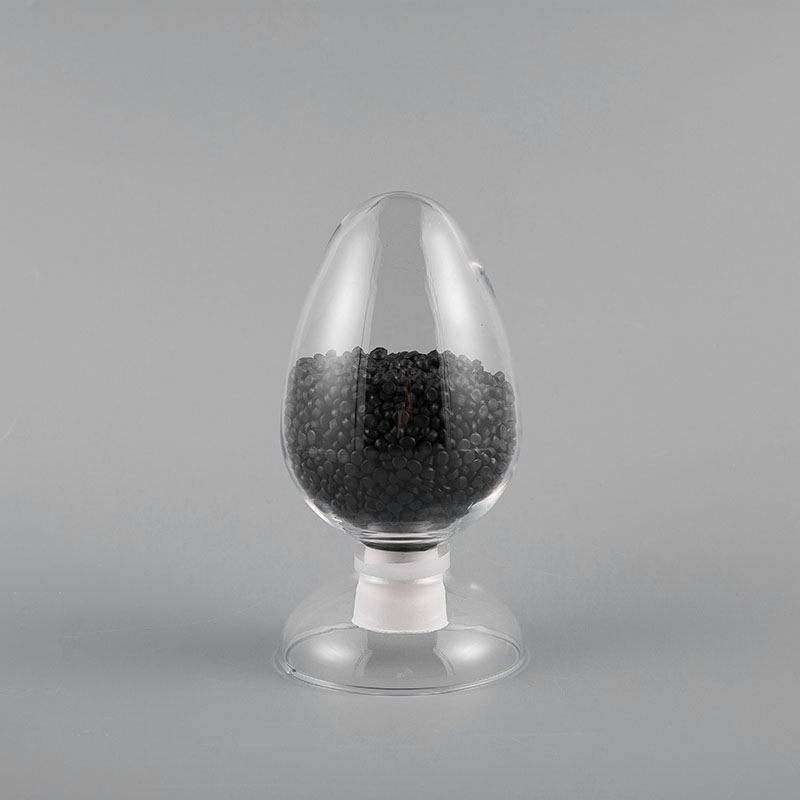
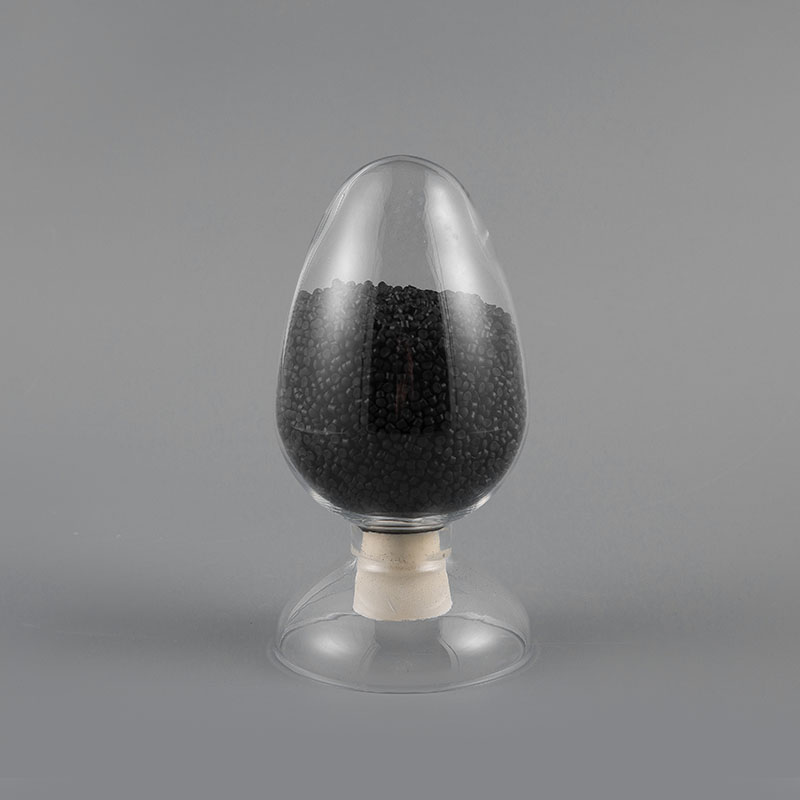 Wholesale ML-TH9001 Thermoplastic LSZH flame- retardant sheath material SupplierWe Are China Wholesale ML-TH9001 Thermoplastic LSZH flame- retardant sheath material Suppliers, Factory, Hangzhou Meilin New Materials Te...View Product →
Certification and Standard Compliance
Certification is the bridge between a tested compound and a marketable cable: without the right CPR class, UL listing, or TUV material certificate, even a perfect compound will not reach the customer's approved vendor list.
The grades a manufacturer carries show which markets it can serve. European building cables require CPR classes such as B2ca, Cca, and Dca, which depend on the compound's heat release and smoke production. Communication cables for North America need UL CM or CMR ratings. Photovoltaic cables use material certificates such as TUV Rheinland 2PfG 1169 or the marine PV standard 2PfG 2962. These certificates document the compound's performance under the same fire and smoke conditions the finished cable will face in certification.
Meilin's position in this area has been confirmed by external audits: the company received a TUV Rheinland certificate for its photovoltaic cable material and signed a TUV Rheinland 2PfG 2962 certification project for offshore photovoltaic cable material, which supports the role of international cable compound standards in procurement decisions.
For a B1 building-wire project, a buyer should specify a compound with a safety margin, such as the B1-grade thermoplastic LSZH sheath compound from Meilin, which combines a 90-degree temperature class with a nominal oxygen index near 38 percent. For photovoltaic strings, the irradiated LSZH sheath compound for photovoltaic cables with a 125-degree rating is the type of grade that matches TUV-listed cable designs.
Wholesale ML-FH125-PV Irradiated LSZH flame- retardant polyolefin sheath materiaWe Are China Wholesale ML-FH125-PV Irradiated LSZH flame- retardant polyolefin sheath material for Solar cable Suppliers, Factory, Hangzh...View Product →Wholesale ML-H9001B1 Thermoplastic LSZH flame- retardant B1 grade sheath materiaWe Are China Wholesale ML-H9001B1 Thermoplastic LSZH flame- retardant B1 grade sheath material Suppliers, Factory, Hangzhou Meilin New Ma...View Product →How a Cable Maker Should Audit an LSZH Supplier
A practical LSZH supplier audit should verify five things: raw material lot control, line-side process records, laboratory capability, batch traceability, and retained samples from every production lot.
- Ask for incoming inspection records for ATH and magnesium hydroxide, including moisture and particle size data for the last twelve months.
- Walk the compounding line and compare temperature set points against the documented formula of the grade you plan to buy.
- Confirm that the laboratory can run oxygen index, smoke density, acid gas, tensile, and thermal aging tests with its own equipment and staff.
- Trace one finished batch back to its raw material lot numbers, production date, line number, and release test report.
- Open the retained sample cabinet and compare old pellets against the current batch for color, geometry, and mechanical behavior.
A serious supplier will share process records and retained samples without hesitation. If a manufacturer cannot show either, the quality system exists on paper only.
Frequently Asked Questions about LSZH Quality Control
What minimum oxygen index should an LSZH compound have?
A commercial thermoplastic LSZH compound should hold at least 32 percent measured by ISO 4589-2. B1-rated building-wire compounds are normally specified at 36 to 38 percent, and crosslinked 125-degree grades can reach 38 to 40 percent.
What is the difference between thermoplastic and crosslinked LSZH?
Thermoplastic LSZH melts again when heated and is extruded like standard polyethylene. Crosslinked LSZH, made by silane grafting or electron-beam irradiation, forms a three-dimensional network that holds its shape at elevated temperature and supports 125 to 150-degree ratings for photovoltaic, automotive, and rail cable applications.
How can a cable factory check LSZH quality on arrival?
Run three quick checks: measure the oxygen index on a pressed plaque, verify pellet moisture below 0.3 percent, and extrude a trial sheath to inspect surface, die behavior, and elongation at break. Full smoke and acid gas tests belong in a certified laboratory.
Why did my cable fail a CPR test even though the compound certificate was valid?
CPR classification depends on the finished cable construction, not only the compound. Wall thickness, filler components, and extrusion temperature all change combustion behavior. The compound needs a safety margin, so a B1-grade material for a European building cable should have a higher oxygen index than the minimum required by the cable standard.
The practical rule for procurement: if a supplier can show repeatable oxygen index values, traceable incoming lots, and retained samples from every batch, the quality system is real. If not, the certificate is just paper.