
 English
 中文简体
中文简体 русский



Article Directory
A cable plant in Southern Europe approved a 90°C low-smoke zero-halogen (LSZH) sheath compound after three pilot batches cleared tensile, smoke, and aging checks. On the first full production order, elongation at break fell below specification. The compounder's answer was that the formulation had not changed. In OEM LSZH compound manufacturing, the formulation is only the starting point: process discipline, verified testing, and batch traceability decide whether a grade stays within tolerance order after order.
What Is OEM LSZH Compound Manufacturing?
OEM LSZH compound manufacturing is the contract production of low-smoke, zero-halogen flame-retardant polyolefin pellets against a buyer-defined specification, with the manufacturer taking responsibility for formulation, compounding, pelletizing, and batch release.
"LSZH compounds are flame-retardant polyolefin materials formulated without halogens in the polymer system, so combustion produces limited smoke and no corrosive acid gases. For tunnels, data centers, metro lines, and public buildings, this combination is a safety requirement rather than an option."
In an OEM relationship, the buyer does not simply purchase a stock grade. The cable maker defines the temperature class, target oxygen index, smoke density limit, mechanical envelope, and the standards the finished cable must pass, such as EN 50525, IEC 60502, or EN 45545-2. The compounder then adapts a proprietary grade or develops a custom formulation. A credible OEM partner must handle both routes and document every adjustment. A repeatable starting point for communication cable programs is a thermoplastic LSZH flame-retardant sheath material for communication cables rated at 90°C.
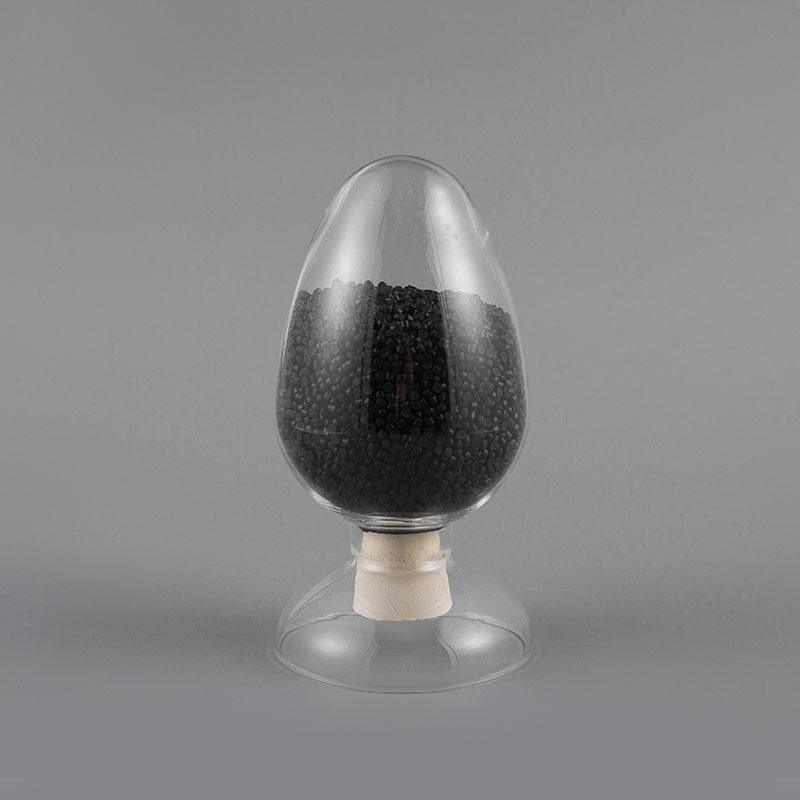
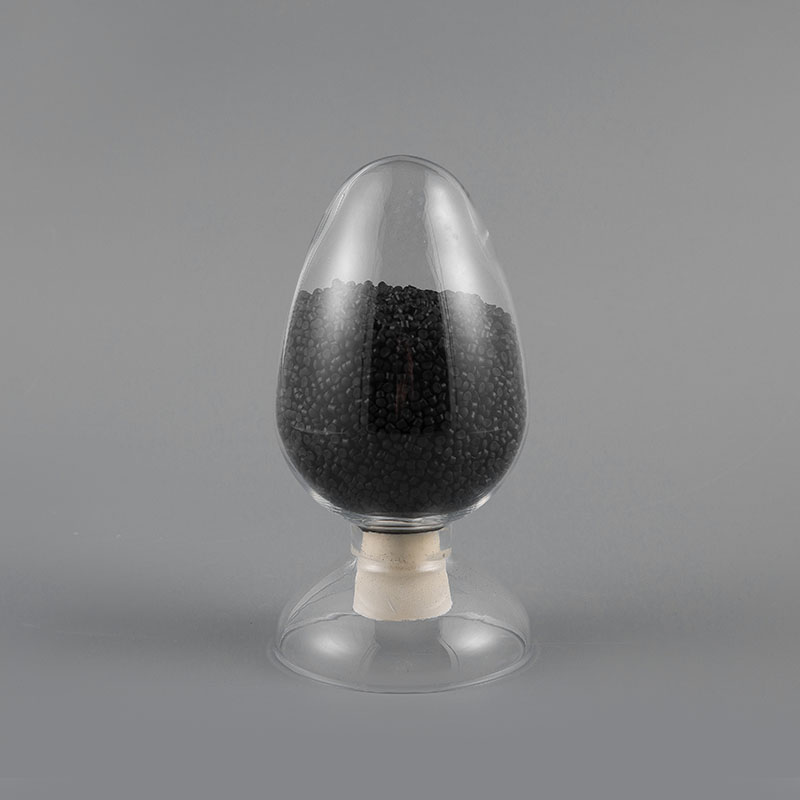 Wholesale ML-TH9001 Thermoplastic LSZH flame- retardant sheath material SupplierWe Are China Wholesale ML-TH9001 Thermoplastic LSZH flame- retardant sheath material Suppliers, Factory, Hangzhou Meilin New Materials Te...View Product →
Manufacturers such as Hangzhou Meilin New Materials Technology Co., Ltd. organize their LSZH series by temperature grade, flame-retardant class, and crosslinking route. That structure shortens the qualification cycle because the technical baseline is already documented. The three properties that separate genuine LSZH from ordinary flame-retardant polyolefin are:
- Halogen-free: no chlorine or bromine in the recipe, verified by IEC 60754-2 conductivity and pH limits.
- Low smoke: light transmission of at least 60% during combustion per IEC 61034-2 keeps evacuation routes visible.
- Flame retardant: self-extinguishing behavior driven by an oxygen index above 32%, measured per ISO 4589-2.
Core Performance Properties That Define a Grade
A qualified OEM LSZH compound is defined by four measurable properties: oxygen index, halogen acid gas output, smoke density, and mechanical retention after thermal aging.
These four values appear on every serious certificate of analysis. The table below shows the typical acceptance ranges applied by OEM cable programs.
| Property | Typical acceptance | Test basis |
| Oxygen index | 32% to 38% depending on grade | ISO 4589-2 |
| Halogen acid gas | pH 4.3 minimum; conductivity 10 µS/mm maximum | IEC 60754-1 / IEC 60754-2 |
| Smoke density | Transmitted light 60% minimum | IEC 61034-2 |
| Tensile strength | 10 MPa minimum for sheath grades | IEC 60811-501 |
| Elongation at break | 125% minimum, grade dependent | IEC 60811-501 |
| Temperature rating | 90°C, 105°C, 125°C, or 150°C | Grade specification |
Power cable programs with a B1 construction-product requirement usually start from a portfolio of LSZH compounds for power cables and then narrow by temperature class. A common specification is the 90°C B1-grade thermoplastic LSZH sheath compound for power cables, which balances flame spread, smoke, and mechanical performance in one grade.
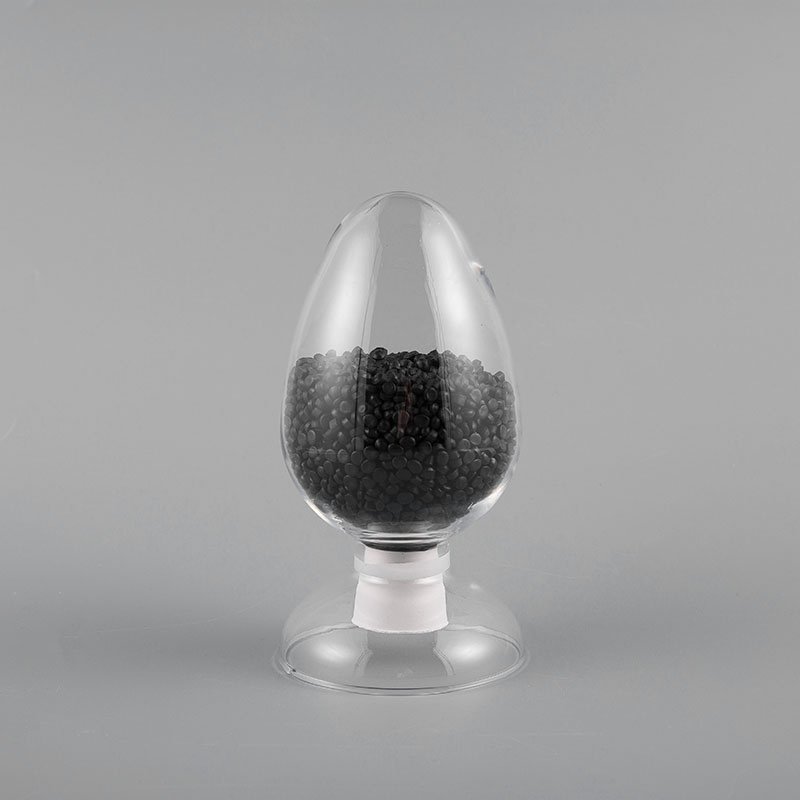
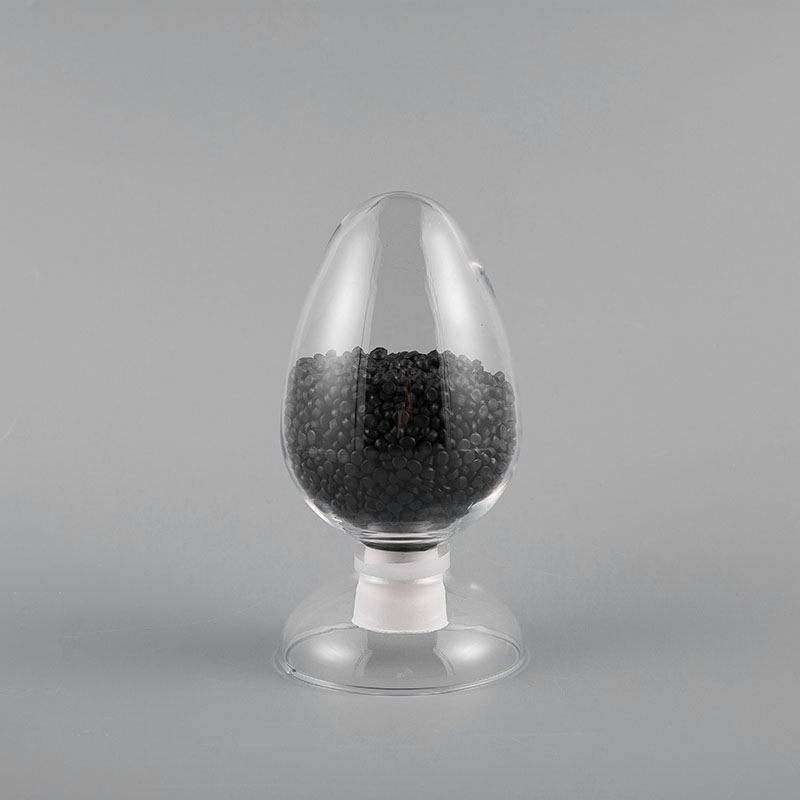
Wholesale ML-H9001B1 Thermoplastic LSZH flame- retardant B1 grade sheath materiaWe Are China Wholesale ML-H9001B1 Thermoplastic LSZH flame- retardant B1 grade sheath material Suppliers, Factory, Hangzhou Meilin New Ma...View Product →Six Manufacturing Steps That Control Consistency
Consistent LSZH pellet output depends on six controlled steps: raw material verification, dry pre-blending, melt compounding, pelletizing, post-drying, and final quality release.
- Raw material verification. Aluminum trihydroxide (ATH) dominates the formulation at 50% to 65% loading, so every incoming lot of ATH, coupling agent, and antioxidant must match its certificate of analysis before it enters the line.
- Dry pre-blending. High-speed mixing homogenizes the powder system and prevents ATH agglomeration, which otherwise appears later as surface roughness and tensile drop-outs.
- Melt compounding. Twin-screw extrusion must keep shear and temperature zones stable; LSZH melts are sensitive to both, and a 5°C drift can change flame-retardant response and crosslinking behavior.
- Pelletizing. Underwater or strand cutting determines pellet geometry. Oversized or irregular pellets cause dosing fluctuations on the cable extruder and uneven wall thickness.
- Post-drying and screening. Residual moisture above 0.1% creates voids in insulation, so drying time, air flow, and fines removal are part of the grade specification.
- Final quality release. Each lot is tested for oxygen index, smoke density, mechanical properties, and thermal aging before shipping, with retained samples held for the warranty period.
A 2% to 3% shift in ATH loading moves oxygen index and elongation in opposite directions. Gravimetric feeding, batch re-checks, and documented line settings matter more than a clever recipe.
How to Audit an OEM LSZH Compound Supplier
Audit four areas before approving an OEM LSZH supplier: plant cleanliness, laboratory verification capability, batch traceability, and change control.
- Dedicated LSZH lines. Halogen-free compounds must not share a line with PVC without a full purge protocol, because chlorine contamination destroys the zero-halogen claim.
- In-house laboratory testing equipment. The supplier should run oxygen index, smoke density, and mechanical tests internally instead of waiting for external laboratories.
- Batch traceability. Every pallet should trace back to raw material lots, production line, date, and operator, with records retained for audit.
- Written change control. Any formulation or process change must trigger re-qualification with the buyer before commercial supply resumes.
- Certification records. Look for third-party programs, such as TÜV certification for photovoltaic cable materials, as evidence of an established quality system.
Hangzhou Meilin operates three production bases in Lin'an with more than 40,000 m² of site area and 31 automated lines. The company documents its factory environment and in-house laboratory testing equipment for customer audits, and it employs more than 210 people, including five senior engineers, across research, production, and quality functions.
Thermoplastic vs Crosslinked LSZH
Choose thermoplastic LSZH when extrusion speed, recyclability, and simplicity matter; choose crosslinked LSZH when the cable must survive overload temperatures, thin-wall construction, or aggressive service conditions.
Thermoplastic LSZH
- Remeltable scrap can be recycled back into the process.
- Faster extrusion with standard screw designs.
- Practical for 90°C to 105°C continuous ratings.
- Common in building wire and communication cables.
Crosslinked LSZH
- Silane, peroxide, or irradiation crosslinking routes.
- 125°C to 150°C continuous ratings after crosslinking.
- Better heat deformation and oil resistance.
- Required for photovoltaic, automotive, and marine cables.
A pragmatic selection rule: if the cable must pass a 125°C heat shock or a thin-wall tensile test, start with a crosslinked grade such as the 125°C silane-crosslinkable LSZH flame-retardant polyolefin cable material instead of forcing a thermoplastic formula to the limit.
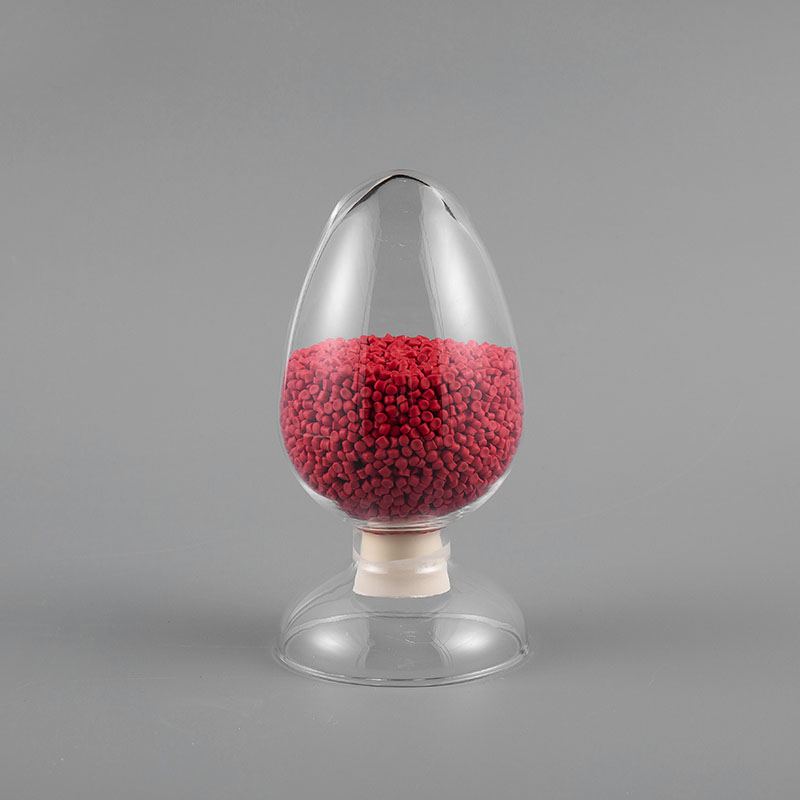 Wholesale ML-GJ1251 125℃ Silane crosslinkable LSZH Flame retardant Polyolefin CaWe Are China Wholesale ML-GJ1251 125℃ Silane crosslinkable LSZH Flame retardant Polyolefin Cable Material Suppliers, Factory, Hangzhou Me...View Product →
OEM LSZH Compound Manufacturing FAQs
Selection decisions usually come down to four questions. The answers below mirror the questions OEM cable makers ask during supplier qualification.
What does OEM mean in LSZH compound manufacturing?
OEM refers to contract manufacturing in which a compounder produces pellets against a buyer-defined specification, either from a proprietary grade or from a custom formulation. The compounder is responsible for production consistency, testing, and batch release.
Which tests prove a compound is truly halogen-free?
The accepted evidence is IEC 60754-1 and IEC 60754-2, which measure the pH and conductivity of combustion gases. Combined with IEC 61034-2 smoke density and ISO 4589-2 oxygen index, these four results define whether a material is genuinely low-smoke and zero-halogen.
How should I compare two OEM LSZH suppliers?
Compare laboratory equipment, batch traceability, line dedication, change control, and certification records rather than price alone. A low price per kilogram means nothing if the supplier cannot reproduce the certificate of analysis across production lots.
What temperature classes are available for LSZH compounds?
Thermoplastic LSZH grades typically cover 90°C and 105°C, while crosslinked grades reach 125°C and 150°C. The choice depends on the cable standard, the application environment, and the compounder's crosslinking capability.