
 English
 中文简体
 русский




Article Directory
- 1 Why LSZH Quality Testing Starts at the Compound, Not the Cable
- 2 The Core Parameters That Define LSZH Compound Quality
- 3 Fire Performance: Halogen Content and Smoke Density
- 4 Mechanical and Thermal Properties: Strength After Aging
- 5 Batch Consistency: The Factor That Determines Extrusion Stability
- 6 Documentation and Certification: Paperwork Is Part of Quality
- 7 A Practical Incoming Inspection Workflow
- 8 Conclusion: Test Early, Test Often, and Verify the Evidence
Every cable manufacturer has heard a variation of the same warning: a batch of low-smoke halogen-free (LSZH) compound extrudes cleanly, produces a smooth cable surface, and passes routine electrical checks. Then, in the horizontal flame test, the smoke density fails. Or the pH of the combustion gas sits below the required 4.3. Or the elongation at break drops below the certified value after heat aging.
The conclusion is direct: LSZH compound quality cannot be judged from extrusion behaviour alone. It must be verified through a defined set of chemical, physical, and fire-performance tests, ideally before the compound enters production.
Why LSZH Quality Testing Starts at the Compound, Not the Cable
LSZH materials are specified because of what they do in a fire. When a cable burns, the compound must limit smoke, suppress halogen acid gas, and slow flame spread. None of these properties can be observed during normal cable production. If the compound is off-spec, the defect stays invisible until a sample is burned in a laboratory or, worse, until a real fire exposes the cable.
Testing at the compound stage gives cable makers the earliest possible confirmation that the material will meet the end-product standard. That is why serious cable plants run incoming inspection on every LSZH batch and reserve full type testing for new suppliers and new grades.
The Core Parameters That Define LSZH Compound Quality
LSZH quality is defined by a small set of measurable parameters. Most are governed by IEC and ISO standards, and the acceptance limits are typically written into the cable specification or the material data sheet.
| Parameter | Test Method | Typical Acceptance |
|---|---|---|
| Halogen acid gas (pH) | IEC 60754-1 | pH ≥ 4.3 |
| Conductivity of aqueous solution | IEC 60754-2 | ≤ 10 µS/mm |
| Smoke density (light transmittance) | IEC 61034-1/-2 | ≥ 60% |
| Oxygen index | ISO 4589-2 | ≥ 32% |
| Tensile strength (unaged) | IEC 60811-501 | ≥ 10 MPa |
| Elongation at break (unaged) | IEC 60811-501 | ≥ 125% |
These six values form the foundation. A complete incoming inspection programme also includes heat aging, thermal elongation for crosslinked grades, and a review of the supplier's certification documents.
Fire Performance: Halogen Content and Smoke Density
The phrase "halogen-free" only means something when it is measured. In practice, the compound is burned under controlled conditions, and the combustion gas is analysed for pH and conductivity. A pH below 4.3 or a conductivity above 10 µS/mm indicates the presence of corrosive halogen acid gas that can attack equipment and endanger people in a fire.
Reading pH and Conductivity Correctly
pH and conductivity are complementary, not interchangeable. A material can show an acceptable pH reading while producing high-conductivity combustion water, which is why IEC 60754-1 and IEC 60754-2 are normally run as a pair. The sample preparation method also matters: the test requires deionised water, a calibrated pH meter, and careful temperature control. Results from uncalibrated equipment are worse than no results at all.
Smoke Density and the 60% Threshold
Smoke density is measured by burning the cable or compound in a sealed chamber and recording the light transmittance through the smoke. The 60% minimum transmittance is the common requirement across international standards, although certain rail and marine specifications demand higher values. When evaluating a new supplier, ask for the full quantitative hazard assessment of LSZH materials rather than a single compliance statement.
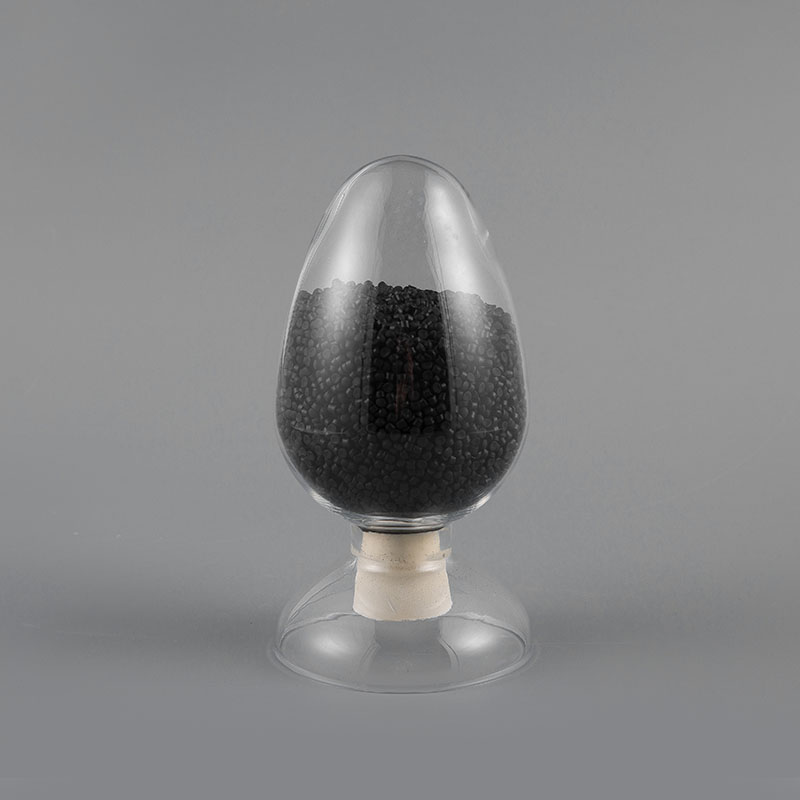
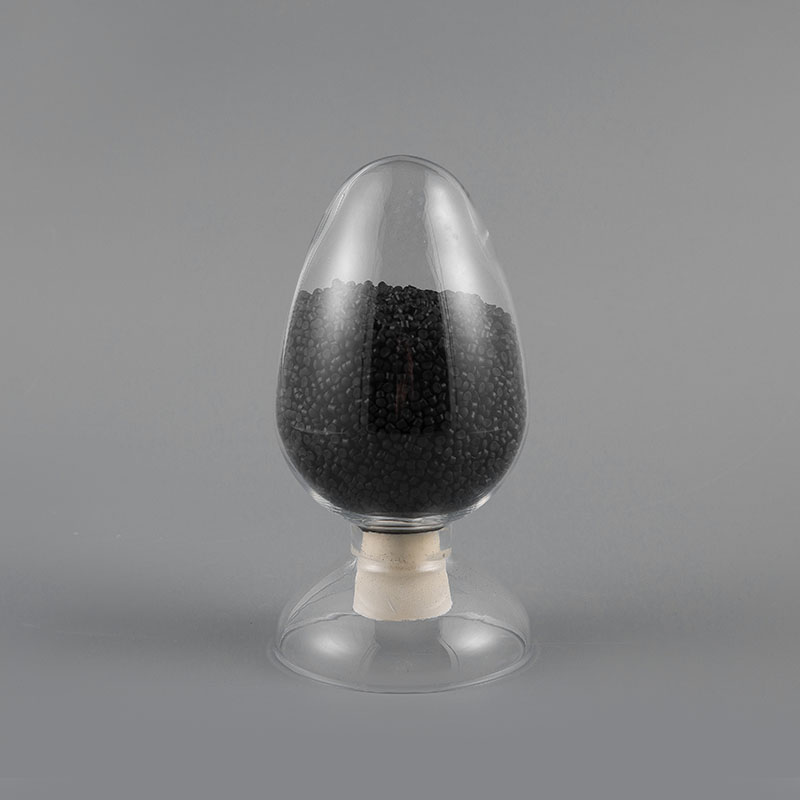
For applications with strict fire-safety classification, the compound grade itself must line up with the target cable class. A B1-grade thermoplastic LSZH sheath compound, for example, is formulated for projects where the European B1 classification and its associated smoke and flaming-droplet requirements apply. Incoming inspection should confirm the grade's classification, not just its halogen-free label.
 Wholesale ML-H9001B1 Thermoplastic LSZH flame- retardant B1 grade sheath materiaWe Are China Wholesale ML-H9001B1 Thermoplastic LSZH flame- retardant B1 grade sheath material Suppliers, Factory, Hangzhou Meilin New Ma...View Product →
Mechanical and Thermal Properties: Strength After Aging
Fire performance is the headline, but mechanical integrity determines whether the cable survives installation and service. Two values matter most: tensile strength and elongation at break. A compound with acceptable unaged values can still be defective if it embrittles after heat aging.
Heat Aging Exposes Weak Stabilisation
Aging at 100°C or 135°C, depending on the temperature class, followed by retesting of tensile and elongation, exposes poor stabilisation and low-quality base polymers. The percentage retention after aging is often more informative than the absolute value. A material that loses more than 30% of its original elongation is likely to crack during bending or thermal cycling, even if it passes the unaged requirement.
Thermal Elongation for Crosslinked Grades
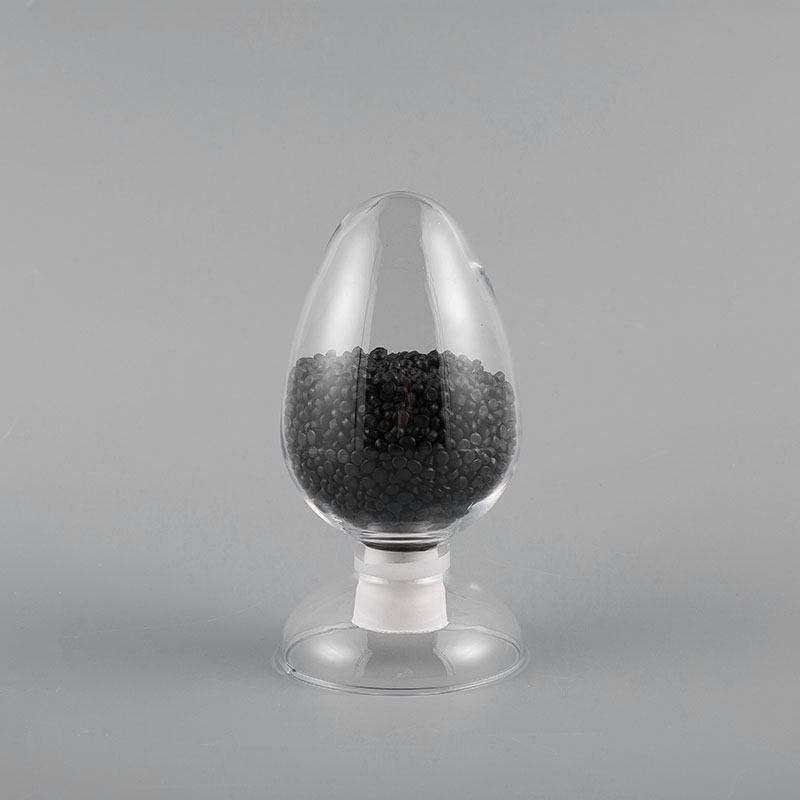
For crosslinked LSZH grades, thermal elongation tests confirm that crosslinking is sufficient. The sample is heated under a fixed load, and the elongation and permanent set are measured. Excessive deformation indicates under-curing, which leads to poor oil resistance, low heat deformation resistance, and reduced service life. This issue is central to the long-term mechanical and electrical performance of LSZH compounds, and it explains why crosslinked grades are chosen for applications requiring 105°C or 125°C ratings. In such cases, a 105°C irradiation cross-linked LSZH insulation compound should demonstrate stable elongation after aging, consistent with its rated temperature.
Wholesale ML-FJ1051 105℃ Irradiation cross- linked LSZH flame-retardant insulatiWe Are China Wholesale ML-FJ1051 105℃ Irradiation cross- linked LSZH flame-retardant insulation material Suppliers, Factory, Hangzhou Mei...View Product →
Do not accept the unaged data sheet as proof of quality. Ask for aged values and, where possible, the full aging curve for the specific batch being delivered.
Batch Consistency: The Factor That Determines Extrusion Stability
Two batches of LSZH compound can meet the same specification on paper and still behave differently on an extrusion line. Filler dispersion is usually the culprit. LSZH formulations rely on high loadings of aluminium hydroxide or magnesium hydroxide to achieve flame retardancy and smoke suppression. If the filler is poorly dispersed or inadequately surface-treated, the compound becomes difficult to extrude, produces a rough surface, and leaves the cable with inconsistent mechanical properties. Uneven colour, rough pellet surfaces, and high moisture content are useful visual warnings during incoming inspection.
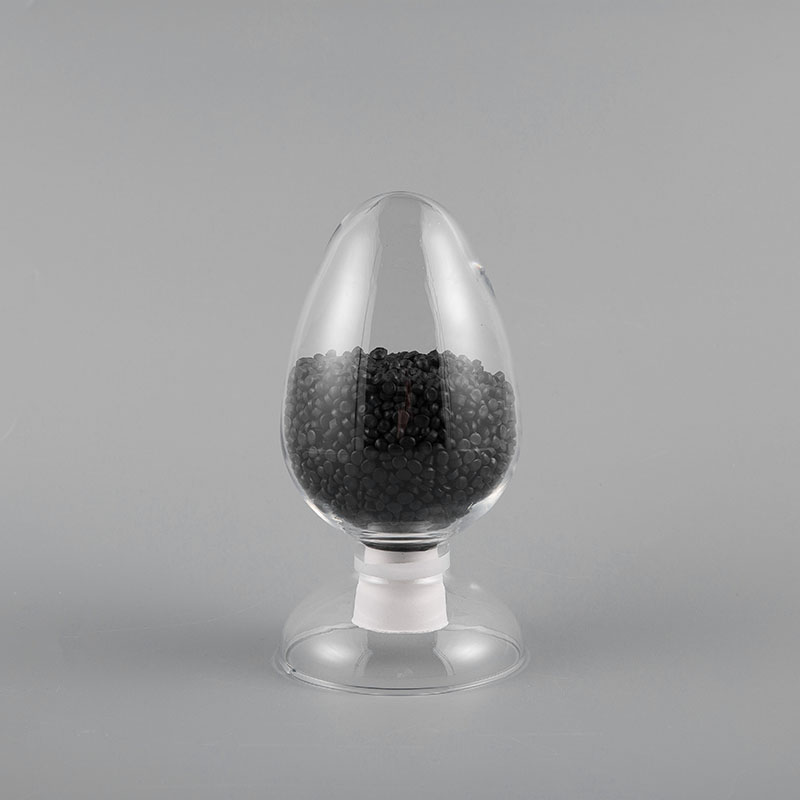
Batch-to-batch consistency is also a processing issue. A change in viscosity or moisture level can shift the screw amperage, alter the take-up speed, and create dimensional variation. Put simply, the most expensive LSZH compound failure is the one discovered only mid-run. For communication cable applications, where multiple sheath layers and tight diameter control are involved, a thermoplastic LSZH sheath material for communication cables should be supplied with documented lot-to-lot consistency in melt flow and moisture content.
Wholesale ML-TH9001 Thermoplastic LSZH flame- retardant sheath material SupplierWe Are China Wholesale ML-TH9001 Thermoplastic LSZH flame- retardant sheath material Suppliers, Factory, Hangzhou Meilin New Materials Te...View Product →Documentation and Certification: Paperwork Is Part of Quality
A quality LSZH compound arrives with a clear paper trail. The material data sheet states the temperature class, typical values, and applicable standards. The batch certificate links the delivered bags to specific test results. Third-party certification from an accredited laboratory or from a recognised body such as UL or TÜV is valuable evidence that the compound has been independently evaluated. However, certification should be checked, not just collected. Look at the certificate's validity period, the standard revision it references, and whether the certified grade matches the delivered formulation. Test reports that are several years old, or that describe a different grade number, are poor evidence of current quality.
Photocopied certificates mean nothing without batch traceability. Connect the certificate to the shipment using the batch number, and record the results in your own incoming inspection system.
A Practical Incoming Inspection Workflow
An effective workflow balances thoroughness with production cost. Not every batch requires every test, but the programme should follow a logical sequence:
- Documentation review: verify the batch certificate, third-party reports, and grade designation before unloading the shipment.
- Visual inspection: check bags, pellet shape, colour consistency, and any signs of contamination as the material is unloaded.
- Rapid screening: measure moisture content, melt flow, and, if equipment is available, oxygen index on every batch.
- Full type testing: run pH, conductivity, smoke density, and tensile and elongation tests on the first batch from a new supplier or new grade.
- Periodic re-verification: repeat full type testing at defined intervals or whenever the supplier makes a process change.
For cable makers preparing to qualify a new LSZH supplier, the manufacturer's own testing capability is a strong signal. Hangzhou Meilin maintains dedicated in-house laboratory testing equipment, which supports faster batch verification and tighter quality control before shipment.
Conclusion: Test Early, Test Often, and Verify the Evidence
LSZH compound quality is not one number on a data sheet. It is the combination of halogen-free behaviour, smoke suppression, mechanical retention after aging, consistent processing, and credible documentation. Cable makers that test at the compound stage, rather than discovering problems in the finished cable, reduce scrap, avoid certification delays, and protect themselves from the reputational damage of a failed fire-safety test.
Start with the core parameters, verify every new supplier, screen every incoming batch, and treat documentation as part of the specification. In low-smoke halogen-free materials, quality is always proven by measurement.