
 English
 中文简体
 русский




Article Directory
Two cable factories receive quotations for the same thermoplastic low smoke zero halogen (LSZH) sheath grade. One supplier quotes 15 percent lower, and its datasheet looks nearly identical. After the first production run, the cheaper material fails the oxygen index test, produces excess smoke in the IEC 61034 chamber, and misses the abrasion requirement. The batch is scrapped, delivery slips, and a two-week price advantage becomes a two-month commercial problem. LSZH compound reliability is not visible in a pellet sample; it lives in formulation discipline, filler dispersion, and the testing depth behind every certificate of analysis.
This guide provides a practical selection process: a weighted evaluation scorecard, datasheet parameters to compare, audit questions for the factory visit, and cost rules that stop a low quote from becoming an expensive order.
Why LSZH Compound Reliability Varies by Manufacturer
A reliable LSZH compound manufacturer controls three variables that inconsistent suppliers leave to chance: base resin consistency, flame-retardant filler dispersion, and batch-to-batch verification.
Core definition
Low smoke zero halogen (LSZH) compound is a polyolefin-based cable material that replaces halogen-based flame chemistry with mineral flame-retardant fillers. Under fire it releases limited smoke, produces no hydrogen halide gases, and keeps the acid gas pH at 4.3 or higher in the IEC 60754-2 test.
The flame-retardant mechanism explains most quality differences. LSZH formulations commonly load 40 to 60 percent aluminum hydroxide or magnesium hydroxide by weight. The filler must be surface treated and evenly dispersed; agglomerates reduce elongation, roughen the extrusion surface, and create weak points under flexing. A manufacturer that controls filler quality and dispersion across every lot produces consistent mechanical and fire performance.
Crosslinking adds a second layer of variability. Irradiation cross-linked and silane crosslinkable LSZH need different process windows, and the cure state directly controls hot deformation and oil resistance. Ask which crosslinking route the manufacturer masters, at what temperature classes, and how it verifies cure on production lots.
Build a Weighted Scorecard for LSZH Compound Suppliers
Compare LSZH compound manufacturers with a weighted scorecard, not a single price sheet. The weights reflect how a supplier's internal capabilities predict delivery quality and project risk over a multi-year supply relationship.
Weighted evaluation scorecard for LSZH compound suppliers
- Quality system and certifications (25%): An ISO 9001 system is the baseline; for export business, UL file numbers, VDE approvals, and TUV certificates are direct evidence that third parties have audited the factory.
- Laboratory testing depth (20%): The manufacturer should perform oxygen index, smoke density, pH, conductivity, tensile-aging, and hot deformation tests internally, not only during annual audits.
- Batch consistency and traceability (20%): Every delivery carries a lot code and a certificate of analysis with tested values; retention samples allow disputes to be resolved against the physical lot.
- Technical support (15%): Extrusion troubleshooting, formulation adjustments for revised standards, and storage advice are part of the product, especially when cable designs change.
- Supply stability and lead times (12%): Confirm production capacity, minimum order quantities, packing, and the raw-material inventory policy for filler and resin.
- Price competitiveness (8%): A low quote combined with low test frequency is usually the most expensive option after scrap and rework.
If a supplier cannot name the test standard behind a datasheet value, treat every number on that datasheet as approximate until verified.
Certifications also interact with regional regulation. For European building projects, the CPR reaction-to-fire class decides which LSZH grade is acceptable; see our analysis of LSZH compounds and the CPR for the class-by-class implications.
Compare Datasheet Parameters Before Comparing Price
Check six parameters on every LSZH compound datasheet: tensile strength, elongation at break, aging retention, oxygen index, smoke density, and acid gas pH. Require the test method next to each value.
Mechanical properties and thermal aging
Tensile strength and elongation determine how the installed cable survives pulling, bending, and vibration. Aged values matter more than initial values: a compound that loses 40 percent of its elongation after 168 hours at rated temperature is a maintenance liability. For crosslinked grades, also check hot deformation and oil resistance, because these predict behavior in chemical and heat exposure.
Flame retardancy, smoke, and acid gas
Limiting oxygen index is a screening number, not a final specification. The real requirement comes from the cable standard and reaction-to-fire class: B2ca, Cca, or Dca for building cables, CM or CMR for UL data cables, and EN 45545 for rail. Smoke density and acid gas pH decide how much visibility and corrosion risk remain during a fire; for tunnels, data centers, and high-density buildings, use these two as the first selection filters.
| Parameter | Test method | Typical acceptance | What it protects |
| Tensile strength | IEC 60811-501 | 10 MPa min. | Installation and flexing life |
| Elongation at break | IEC 60811-502 | 125% min. | Ductility and cold bending |
| Aging retention | IEC 60811-401 | 70% min. after aging | Long-term service stability |
| Limiting oxygen index | ISO 4589-2 | 28% min. | Flame spread resistance |
| Smoke transmittance | IEC 61034-2 | 60% min. | Evacuation visibility |
| Acid gas pH | IEC 60754-2 | 4.3 min. | Corrosion to equipment |
| Conductivity | IEC 60754-2 | 10 uS/mm max. | Severity of corrosive environment |
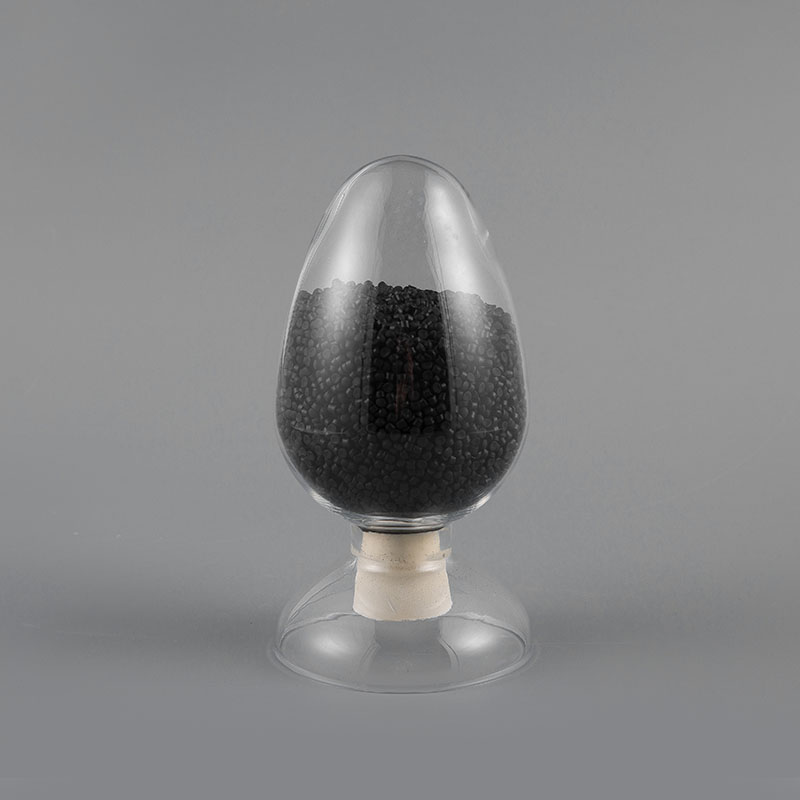
For communication cable projects, request the full datasheet of a thermoplastic LSZH flame-retardant sheath compound and confirm that the oxygen index and smoke density values are certified outputs, not development-phase targets.
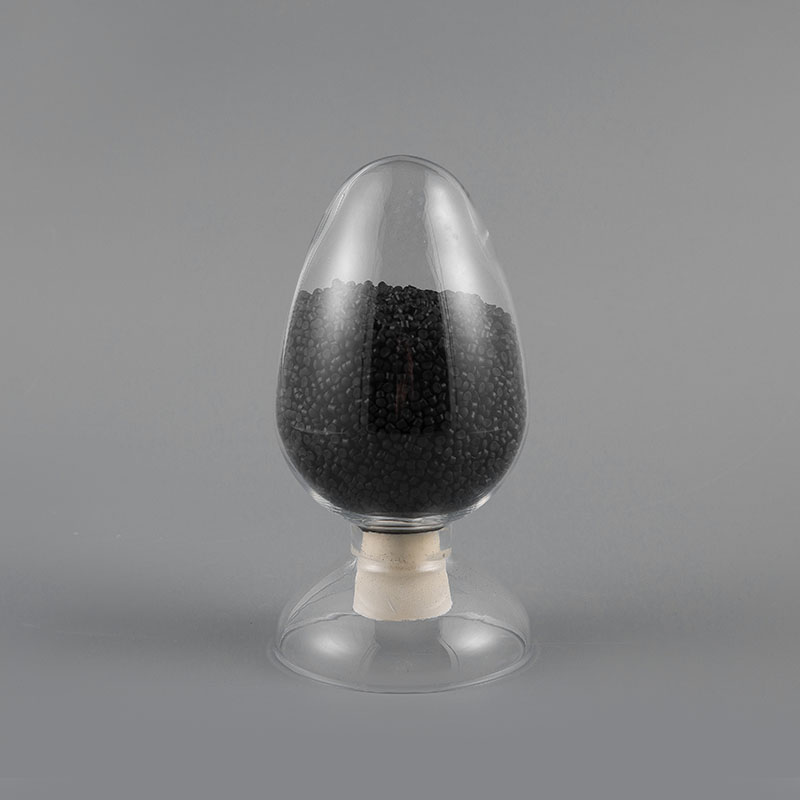 Wholesale ML-TH9001 Thermoplastic LSZH flame- retardant sheath material SupplierWe Are China Wholesale ML-TH9001 Thermoplastic LSZH flame- retardant sheath material Suppliers, Factory, Hangzhou Meilin New Materials Te...View Product →
What a credible certificate of analysis should state
- Lot number and production date that map to the delivered bags
- Measured values for tensile, elongation, aging, oxygen index, smoke density, pH, and conductivity
- The standard and method used for each measurement
- Reference to raw material lots for base resin and flame-retardant filler
- Signature, date, and contact details of the quality-responsible person
Audit the Manufacturing and Quality-Control Process
Verification is the only reliable substitute for trust: confirm production-line count, factory cleanliness, laboratory equipment, and retention-sample policy during an audit.
Scale matters because compounding consistency is an engineering process. Automated dosing and mixing lines deliver flatter process control than manual weighing, especially when filler loadings exceed 40 percent.
Hangzhou Meilin New Materials Technology Co., Ltd. is one example of documented scale. Founded in 1994 in Hangzhou Lin'an, China, the company operates 31 automated production lines across three bases, employs more than 210 people including 5 senior engineers, and commissioned new factories in 2021 and 2024. Meilin produces LSZH, PVC, PE, XLPE, and semiconductive compounds for communication, power, building, transport, and energy cables. Its laboratory testing equipment and company environment are published for customer review before ordering.
Audit questions that separate real capability from brochure claims
- Ask for retention samples from the last six months and test one lot independently
- Run a production trial with your own extrusion line and die geometry
- Ask how out-of-spec or contaminated material is identified and segregated
- Confirm how irradiation crosslinking is done and how the cure state is reported
- Check how laboratory records are archived and whether customers can access them
Crosslinked LSZH deserves separate attention. For thin-wall insulation with 105, 125, or 150 degrees Celsius ratings, the manufacturer must control the crosslinking process tightly. A mature family of irradiation cross-linked LSZH insulation compounds indicates the process has been industrialized across multiple products, not optimized for a single prototype.
Wholesale ML-FJ1051 105℃ Irradiation cross- linked LSZH flame-retardant insulatiWe Are China Wholesale ML-FJ1051 105℃ Irradiation cross- linked LSZH flame-retardant insulation material Suppliers, Factory, Hangzhou Mei...View Product →Put Cost and Supply Stability in Perspective
The lowest price per ton is rarely the lowest total cost; scrap, rework, certification risk, and delayed deliveries usually outweigh the material savings.
Price differences of 5 to 15 percent between similar LSZH grades typically come from cheaper filler grades, lower surface treatment quality, reduced test frequency, or a thinner certificate of analysis. A single failed smoke-density test at a certification laboratory can cost more than the savings from ten truckloads of cheaper material. Under the Construction Products Regulation, the declaration of performance must also match the reaction-to-fire class in the building specification.
Supply stability is a separate evaluation axis. Confirm minimum order quantity, lead time, packaging, and whether the same grade can be produced at more than one site. Ask about the procurement strategy for aluminum hydroxide, magnesium hydroxide, and polyethylene resin, because filler substitution pressure often degrades quality silently.
Total cost of LSZH equals material price plus scrap risk, certification risk, and delivery risk. Evaluate all four components before signing a supply agreement.
Transport-sector projects add humidity, oil, and mechanical stress. A marine-grade irradiated LSZH sheath compound must hold aged elongation and oil resistance while keeping the same flame-retardant performance as the base grade; ask the manufacturer to demonstrate both together.
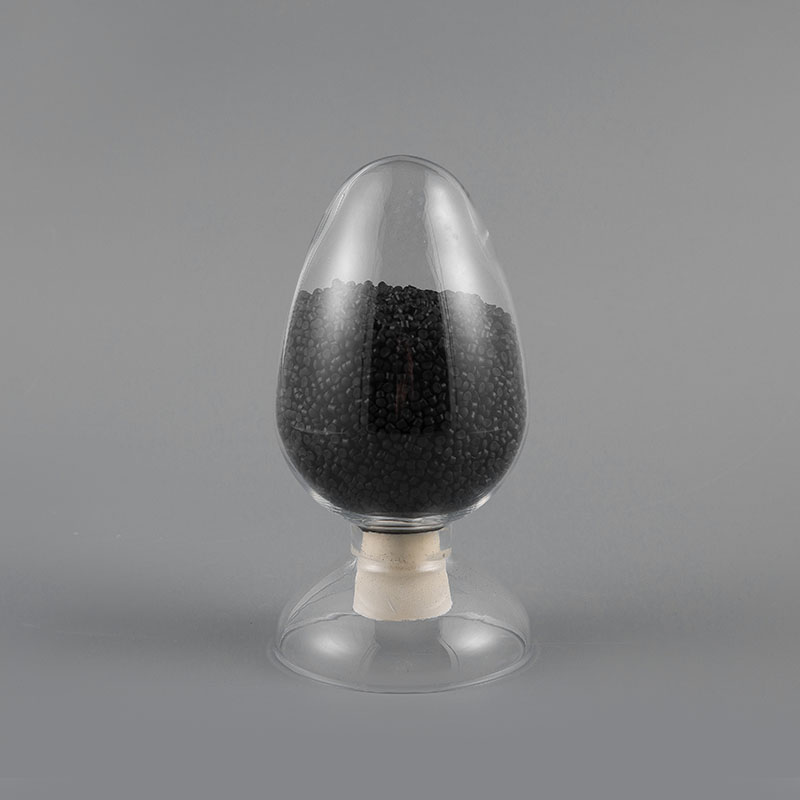 Wholesale ML-FH9002 90℃ irradiated halogen- free flame-retardant sheath materialWe Are China Wholesale ML-FH9002 90℃ irradiated halogen- free flame-retardant sheath material for marine cables Suppliers, Factory, Hangz...View Product →
Frequently Asked Questions
What certifications should an LSZH compound manufacturer hold?
An LSZH compound manufacturer should hold an ISO 9001 quality management system and run an internal laboratory. For export cable projects, look for UL file numbers, VDE approvals, and TUV certificates such as the photovoltaic cable material certification Meilin obtained. For building cables in Europe, the manufacturer must issue a declaration of performance under the Construction Products Regulation.
How can I verify batch consistency before placing a large order?
Request certificates of analysis from at least three recent production lots of the same grade and compare the spread of tensile, elongation, oxygen index, and smoke density values. A reliable manufacturer shows small lot-to-lot variation. Ask for retention samples and have one lot tested independently before committing to volume.
What is the difference between thermoplastic and crosslinked LSZH?
Thermoplastic LSZH softens at high temperature and suits communication cables, control cables, and general building wire. Crosslinked LSZH, produced by irradiation or silane grafting, resists deformation and hot flow, making it suitable for automotive, marine, photovoltaic, and high-temperature applications. Confirm the temperature class first: 90, 105, 125, or 150 degrees Celsius.
Why do smoke density and acid gas pH matter in LSZH selection?
Smoke density controls whether people can find an escape route during a fire, and acid gas pH controls how much damage combustion products do to electronics and structures. In tunnels, data centers, and high-density buildings, these parameters often become the deciding factors in LSZH grade selection, independent of price.