
 English
 中文简体
中文简体 русский

Article Directory
In mid-2026, a cable plant quoting a European data center project must attach CPR classification documents, IEC 60754-2 acid gas results and IEC 61034 smoke density reports to every material submittal. Five years ago that paperwork was an export-only ritual; today it is the baseline for construction, rail, photovoltaic and electric vehicle tenders across most regulated markets. For compound producers and cable makers, the strategic question has shifted from "why halogen free?" to "which halogen free grade, certified to which standard, at what cost?"
Halogen free cable materials are insulating and sheathing compounds formulated without intentionally added fluorine, chlorine, bromine, iodine or astatine, and engineered to release minimal smoke and low-toxicity gases under fire exposure. The dominant class is low smoke, zero halogen (LSZH), with acceptance verified through IEC 60754 for acid gas generation and IEC 61034 for smoke density.
Why Halogen Free Compounds Became the Default Specification
Fire safety economics, not environmental sentiment, drive the shift. When a burning cable releases hydrogen chloride and other acid gases, the result is corrosion of switchgear, damage to electronic equipment and greater danger for evacuation routes. Halogen free formulations attack the problem at the source by removing the halogen chemistry from the compound itself.
Three regulatory layers lock the trend in place: the European Construction Products Regulation with reaction-to-fire classes from B2ca to Dca, the EN 45545-2 framework for railway rolling stock, and building codes that restrict smoke-producing cables in air-handling plenums of data centers, hospitals and high-rise towers. Demand-side specifications from photovoltaic, automotive and telecom buyers add a commercial layer on top of the legal one. Together these forces explain why halogen free cables are becoming the standard in modern construction, not a premium option.
A compound that passes the chemistry tests can still fail the cable test. Smoke density and pH are measured on the compound; the finished cable must also meet the flame class, and that depends on extrusion conditions and wall thickness.
Five Trends Reshaping Halogen Free Cable Materials
The next five years will be defined by cross-linked LSZH displacing thermoplastic grades in high-temperature applications, by fire class upgrades moving into ordinary supply specifications, and by compounds engineered for narrow application windows rather than general-purpose use.
- Cross-linking becomes the main differentiator. Irradiation and silane cross-linked LSZH grades hold continuous ratings of 105°C, 125°C and even 150°C with better oil, chemical and mechanical resistance than thermoplastic equivalents. They dominate new-generation catalogs for building wire, photovoltaic systems, automotive thin-wall cable and energy storage.
- Fire classification upgrades raise the performance floor. B1 and B2 classes under GB 31247, B2ca and Cca classes under CPR, and CM/CMR ratings for North American network cable are appearing in everyday purchase orders. Higher fire classes demand higher filler loading, which changes extrusion behaviour and mechanical properties.
- Application-specific formulations take over from one-size-fits-all grades. The same base polymer can no longer serve building, marine and automotive markets simultaneously. Oil-resistant 125°C grades for engine compartments, cold-resistant -40°C grades for outdoor storage, and oxygen-barrier inner sheaths for high-rise risers are separate products with separate chemistry.
- Extreme-condition performance moves from niche to standard. Marine shipboard cable, rail transit, drag chains in robotic cells and photovoltaic arrays in desert or alpine climates demand combined resistance to temperature, humidity, ultraviolet exposure and mechanical flexing. Halogen free compounds increasingly carry a package of properties rather than a single flame test.
- Sustainability and certification converge. RoHS and REACH compliance is assumed, lead-free stabilizer systems are mandatory in most export markets, and thermoplastic LSZH retains an advantage because it stays re-processable. Certificates such as TUV 2PfG 1169 and 2PfG 2962 for photovoltaic cable, or UL listings for network cable, have become procurement filters.
Share of LSZH compound grades by continuous temperature rating in a leading specialty cable material catalog
The 125°C segment leads because photovoltaic, automotive and building-wire programs specify cross-linked grades for sustained heat and mechanical duty.
Read the temperature rating together with the flame class. A 125°C B1 grade and a 90°C B1 grade are different products with different filler systems, and substitution between them is rarely possible.
What to Specify: Key Performance Benchmarks
The acceptance routine for a halogen free compound follows a defined path. Start with the temperature rating, verify the fire class, then confirm the chemistry against the values below.
| Benchmark | Typical acceptance value | Reference standard |
| Halogen content | No more than 0.5% (5 mg/g) | IEC 60754-1 |
| pH of evolved gases | At least 4.3 | IEC 60754-2 |
| Conductivity of evolved gases | At most 10 µS/mm | IEC 60754-2 |
| Smoke density | Light transmittance at least 60% | IEC 61034-2 |
| Reaction to fire | B2ca, Cca or Dca depending on use | EN 50575 (CPR) |
| Continuous temperature | 105°C to 150°C for cross-linked grades | UL 1581 / product data sheet |
| Cold flexibility | -40°C bend without cracks | Customer specification |
These values are acceptance thresholds, not design cushions. A batch that sits exactly at pH 4.3 on the edge of tolerance will fail in production; experienced buyers test every incoming lot and compare trends across ten to twenty batches.
Matching Compound Chemistry to the Application
Selection should start from the end application and the standard that governs it, then move backward to the compound. A 90°C thermoplastic grade is not an inferior product; it is the optimal product only when a higher rating is not required.
For building wire and power cables in projects that mandate a B1 flame class, a thermoplastic LSZH B1 grade sheath compound is a practical first choice: it delivers the classification without a cross-linking step and runs on conventional extrusion lines.
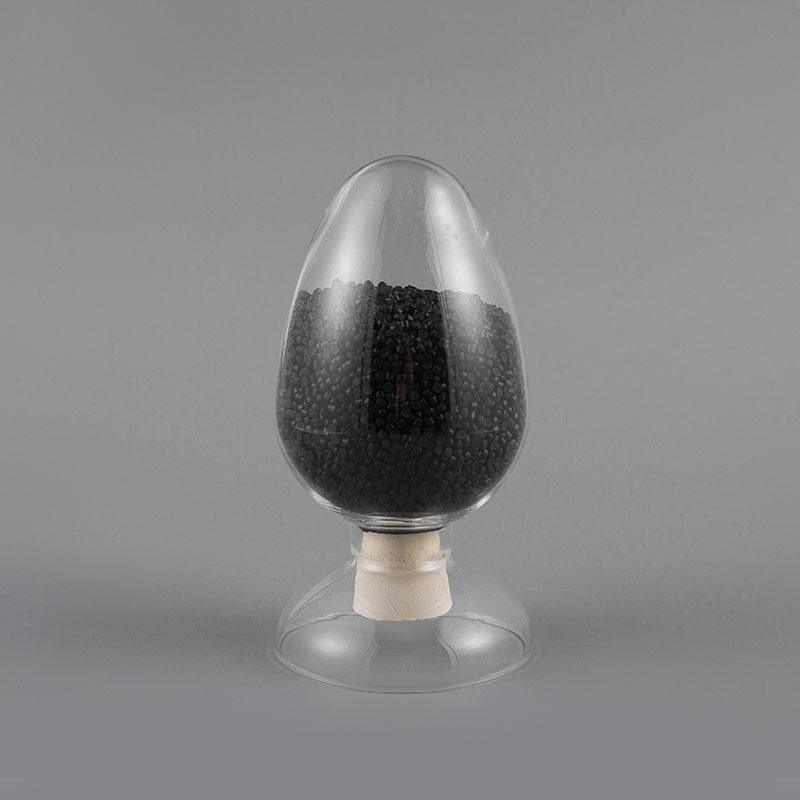
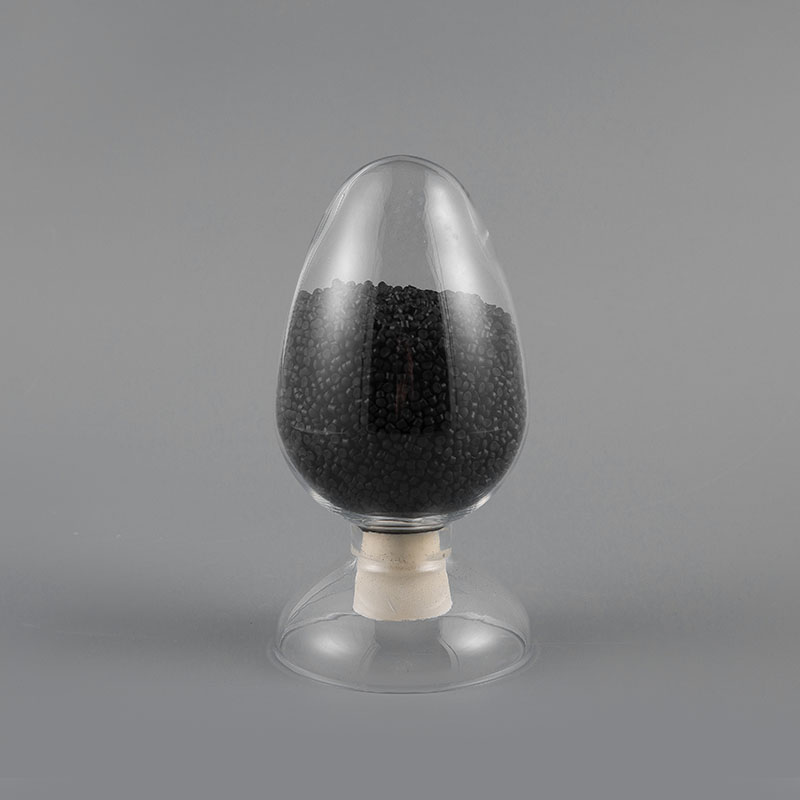 Wholesale ML-H9001B1 Thermoplastic LSZH flame- retardant B1 grade sheath materiaWe Are China Wholesale ML-H9001B1 Thermoplastic LSZH flame- retardant B1 grade sheath material Suppliers, Factory, Hangzhou Meilin New Ma...View Product →
Photovoltaic and energy storage systems push materials harder. A 125°C irradiated LSZH sheath material for solar cables handles sustained conductor heat, ultraviolet exposure and the -40°C cold cycles common in outdoor storage, and supports TUV 2PfG certification programs.
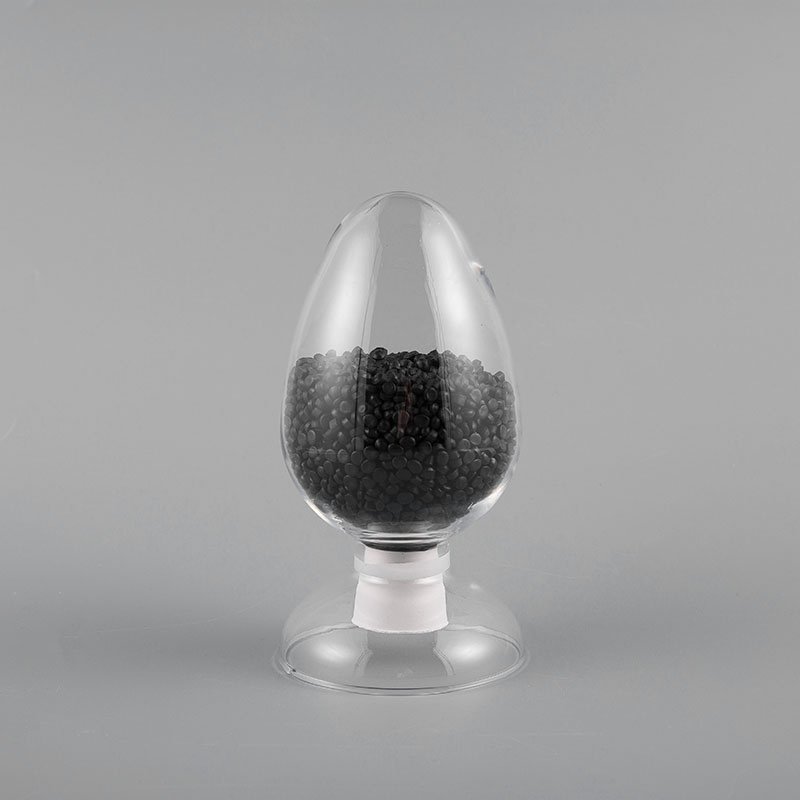
Wholesale ML-FH125-PV Irradiated LSZH flame- retardant polyolefin sheath materiaWe Are China Wholesale ML-FH125-PV Irradiated LSZH flame- retardant polyolefin sheath material for Solar cable Suppliers, Factory, Hangzh...View Product →
Communication and network cables sit at the other end of the spectrum: the priorities are stable extrusion, fast line speeds and a thermoplastic LSZH flame retardant sheath material for communication cables that keeps CM/CMR or Cca/Dca fire performance without changing signal attenuation. Those constraints are the same fire safety and CPR requirements applied to communication cables in every regulated market.
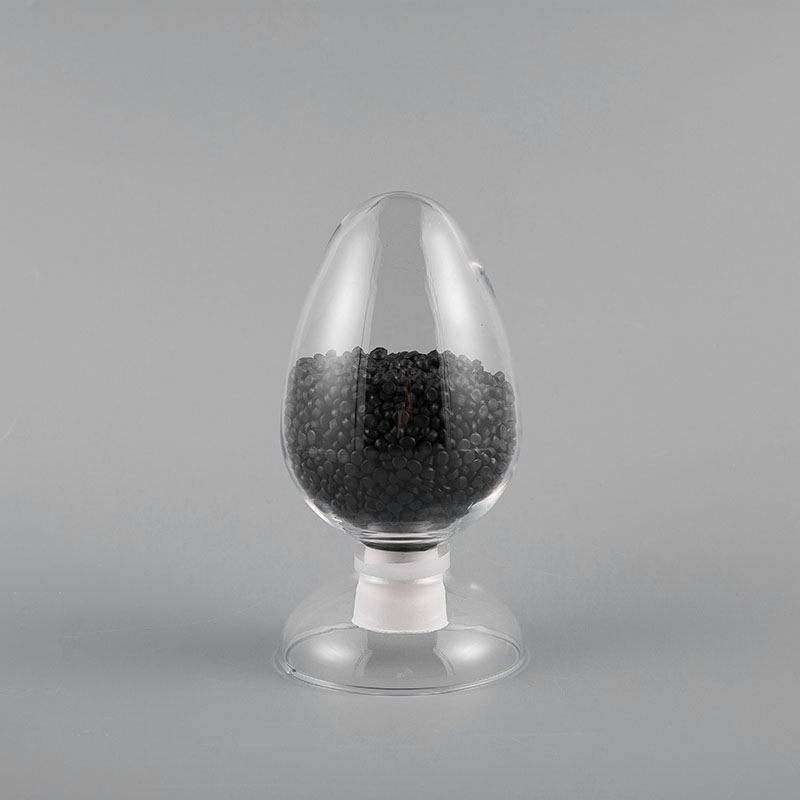
Wholesale ML-TH9001 Thermoplastic LSZH flame- retardant sheath material SupplierWe Are China Wholesale ML-TH9001 Thermoplastic LSZH flame- retardant sheath material Suppliers, Factory, Hangzhou Meilin New Materials Te...View Product →
- Conventional extrusion with high output
- Re-processable and recyclable
- Typical 70°C to 90°C, selected 105°C grades
- Best fit for building, communication and general industrial cable
- Continuous ratings of 105°C to 150°C
- Superior oil, chemical and mechanical resistance
- Requires irradiation or silane cure equipment
- Best fit for photovoltaic, automotive, rail, marine and robot cable
How to Qualify a Halogen Free Compound Supplier
The compound is only half the equation; the supplier's process control decides batch-to-batch consistency. Three checks matter more than the brochure.
- Confirm that the supplier runs an internal laboratory for smoke density, acid gas, tensile and thermal aging tests. A manufacturer backed by in-house laboratory testing equipment releases consistent batches and responds quickly to specification changes.
- Demand batch traceability. Melt flow index, tensile strength, elongation and limiting oxygen index should be recorded per lot, with historical data available on request.
- Check the certificates that match your market: UL, VDE, TUV 2PfG 1169 and 2PfG 2962, CPR documents and RoHS declarations, plus production capacity that keeps the grade stable across large orders.
Hangzhou Meilin New Materials Technology Co., Ltd. is a cable material manufacturer with three production bases in Lin'an, China, 31 automated lines and more than three decades in the industry. Its LSZH families span 90°C thermoplastic grades through 125°C and 150°C cross-linked products. For export-oriented cable makers, the decisive question is whether the supplier's documentation chain, from raw material certificates to final inspection reports, survives an audit by your customer.
Qualify a halogen free compound twice: once in the laboratory and once on your own extrusion line, at the speed and temperature you actually run.
Frequently Asked Questions
What is the difference between LSZH and XLPO?
LSZH describes low smoke, zero halogen performance and says nothing about cross-linking. XLPO is cross-linked polyolefin, most often halogen free in modern formulations. If the cable needs 125°C or higher continuous rating, a cross-linked LSZH-grade XLPO is usually required; for 70°C to 90°C service, thermoplastic LSZH is sufficient.
Are halogen free cable materials mandatory?
In the European Union, the Construction Products Regulation makes reaction-to-fire classification mandatory for cables installed in buildings, and project specifications for public buildings, data centers and transport frequently require halogen free grades. In China, GB 31247 classes B1, B2 and C are increasingly written into building specifications. In the United States, local codes restrict smoke-producing cables in return-air plenums. There is no single global law, but the commercial requirement is effectively universal in regulated export markets.
How much more do halogen free compounds cost than PVC?
Procurement experience with specialty cable materials suggests a premium of roughly 20% to 40% over standard PVC, depending on flame class, filler loading and whether the grade is cross-linked. The gap narrows when total installation cost is compared, because halogen free cables can reduce fire protection requirements and smoke venting costs in buildings.
Which tests should a cable maker run before switching to a new LSZH compound?
Run the full loop: halogen content and pH per IEC 60754, smoke density per IEC 61034, tensile and elongation after thermal aging, the required flame test on the finished cable, and extrusion trials at production speed. Record the melt flow index of every incoming batch and keep the data for at least three years.