
 English
 中文简体
中文简体 русский



Article Directory
- 1 01 / Why smoke density drives material selection
- 2 02 / How smoke density is measured and rated
- 3 03 / Polymer chemistry sets the smoke ceiling
- 4 04 / Application-driven selection rules
- 5 05 / Formulation and process control are part of the spec
- 6 06 / Verify smoke performance on the exact grade you order
- 7 FAQ: smoke density and cable materials
Smoke is the first lethal hazard in a cable fire. Inside a corridor, tunnel, or riser shaft, dense smoke can cut visibility to under one meter within minutes, and most fire fatalities are caused by smoke inhalation rather than flame contact. For cable manufacturers, that makes smoke density - not flame retardancy by itself - the decisive parameter when choosing insulation and sheathing compounds.
01 / Why smoke density drives material selection
Smoke density determines how much light a fire-generated smoke cloud blocks, and it directly controls how long evacuation routes remain visible and how quickly rescue teams can operate inside a structure.
Cables are one of the largest combustible masses in buildings, vehicles, and industrial facilities. A single riser room can hold kilometres of power and communication cable; under an arcing fault or external fire, the whole bundle can ignite, and the resulting smoke reaches occupants long before the flame front does. International specifications therefore judge smoke performance alongside flame spread, using IEC 61034 light transmittance, the EN 50399 smoke classes s1, s2 and s3 in CPR euroclass ratings, and EN 45545-2 R24 smoke density limits for railway rolling stock.
The table below summarises where common compound families typically sit on smoke performance. The spread between PVC and LSZH explains why smoke limits, not flame ratings alone, usually decide the material family in smoke-regulated installations.
| Compound family | Typical transmittance | Halogen content | Typical smoke class |
| General-purpose PVC | 10-25% | Chlorine present | s3 |
| Low-smoke FR PVC | 30-55% | Chlorine present | s3 or s2 |
| Thermoplastic LSZH | 70-90% | None | s1 or s2 |
| Crosslinked LSZH | 70-90% | None | s1 or s2 |
02 / How smoke density is measured and rated
Smoke density for cables is measured by burning a defined cable length in a 3 m3 chamber and recording the percentage of light transmitted through the smoke over 40 minutes, per IEC 61034-2.
The chamber contains an optical system with a light source and a photocell; transmittance is logged from ignition through the full test window. A higher value means a thinner smoke layer. Many specifications treat 60 percent as the minimum low-smoke threshold, while CPR smoke classes s1, s2 and s3 refine the rating using smoke growth rate (SMOGRA) and total smoke production (TSP) measured in the EN 50399 cable test.
Material-level testing used in development
Compound developers also use the NBS smoke chamber according to ASTM E662 or ISO 5659-2 to measure specific optical density (Ds) on plaques. These material-level numbers are faster and cheaper than full cable burns, and they expose formulation differences before a compound reaches production. Rail certification adds EN 45545-2 R24 limits based on chamber exposure at defined heat fluxes.
03 / Polymer chemistry sets the smoke ceiling
The polymer backbone and additive package decide the ceiling for smoke performance: chlorinated polymers release dense, corrosive, carbon-rich smoke, while halogen-free polyolefins carrying mineral hydroxide fillers release mostly water vapour and leave a stable char residue.
Why PVC smoke is dense and corrosive
PVC resin contains roughly 57 percent chlorine by weight. On combustion, dehydrochlorination releases hydrogen chloride gas, and the remaining carbon skeleton forms the soot particles that make the smoke opaque. Flexible formulations add 30 parts or more of plasticizer per hundred parts of resin, increasing the fuel load and the aerosol fraction. Even flame-retardant PVC compounds rarely exceed 50 to 60 percent transmittance, and their smoke contains acid that corrodes electronics and rescue equipment.
Why LSZH smoke stays thin
Low-smoke halogen-free compounds are polyolefin-based and loaded with aluminium hydroxide or magnesium hydroxide, typically 40 to 65 percent by weight. When heated, these fillers decompose endothermically, release water vapour that dilutes the combustion products, and leave a stable metal-oxide char that traps solid carbon. The result is a light smoke with transmittance commonly between 70 and 90 percent in IEC 61034 testing.
Carbon-rich soot, hydrogen chloride in the gas phase, corrosive aerosol. Transmittance typically below 55 percent, low material cost, wide processing window.
Water vapour and metal-oxide char, pH above 4.3 per IEC 60754. Transmittance typically above 70 percent, higher filler loading demands tighter compounding control.
Crosslinked LSZH adds thermal integrity. A radiation-crosslinked system, such as a 125 C irradiation crosslinked LSZH insulation compound, resists softening and dripping at continuous conductor temperatures where thermoplastic LSZH would deform, while keeping smoke output low. For a deeper side-by-side review of the two material families, read our comprehensive LSZH versus PVC comparison.
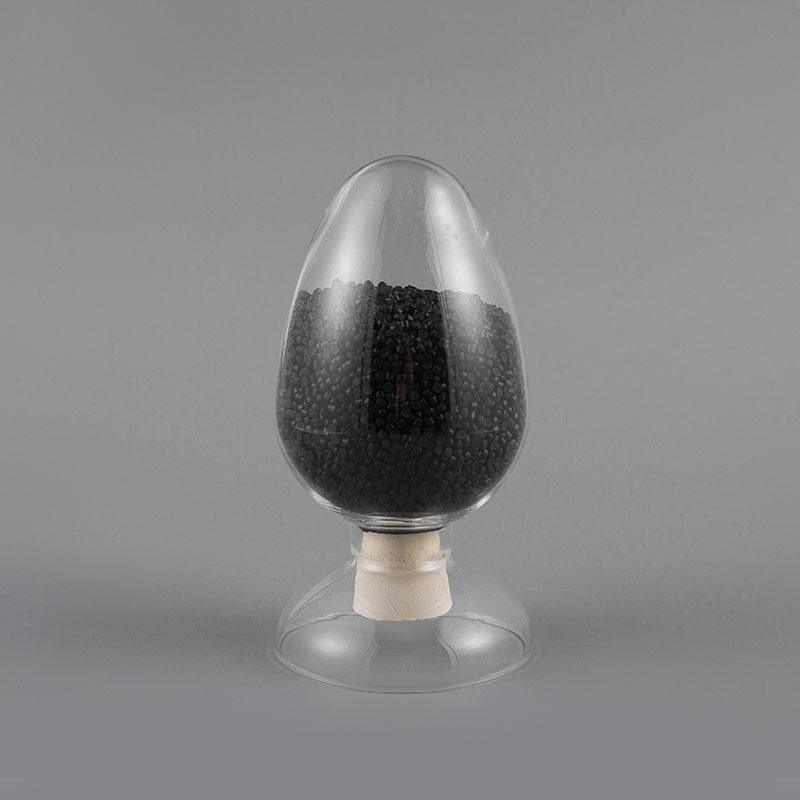
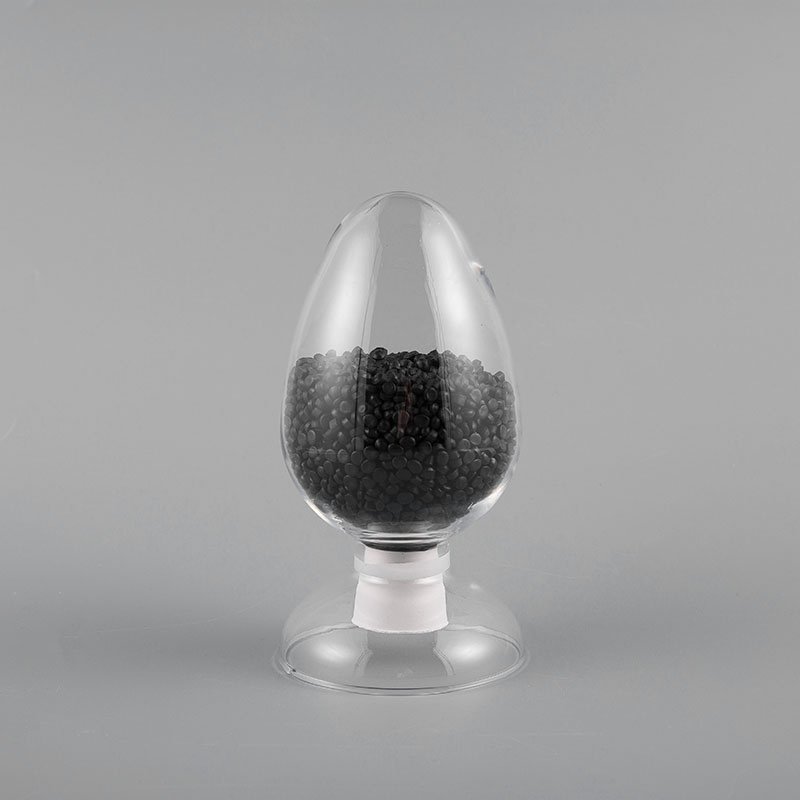
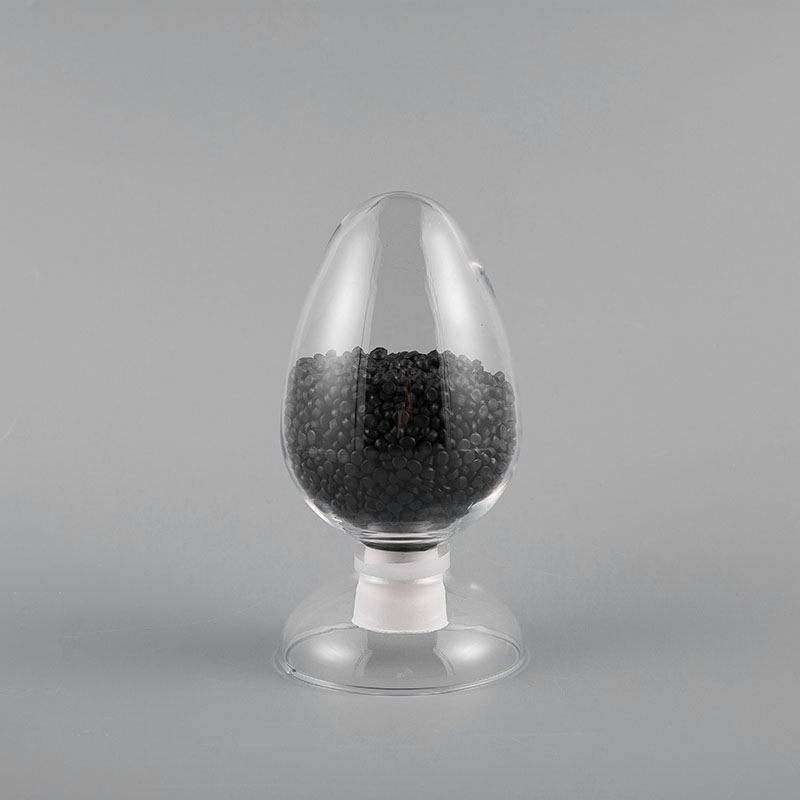
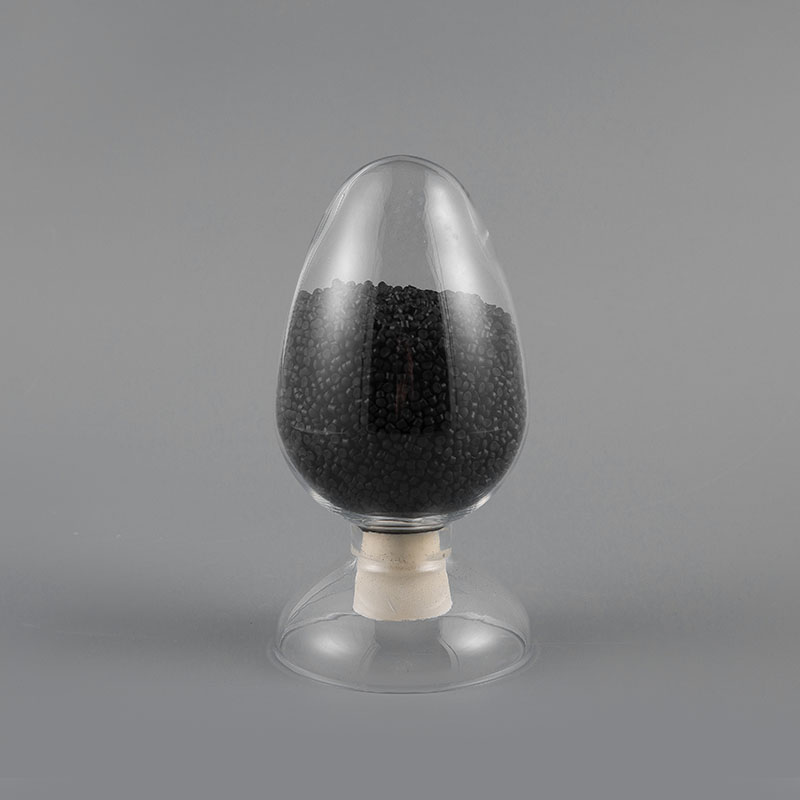 Wholesale ML-FJ1251 125℃ Irradiation cross- linked LSZH flame-retardant insulatiWe Are China Wholesale ML-FJ1251 125℃ Irradiation cross- linked LSZH flame-retardant insulation material Suppliers, Factory, Hangzhou Mei...View Product →
| Property | Flame-retardant PVC | Thermoplastic LSZH | Crosslinked LSZH |
| Smoke transmittance | 30-55% | 70-90% | 70-90% |
| Halogen content | Yes | None | None |
| Acid gas pH, IEC 60754 | Acidic | Above 4.3 | Above 4.3 |
| Typical temperature rating | 70-105 C | 70-90 C | 105-150 C |
| Best-fit installations | Industrial, non-evacuation | Buildings, data centres | Transport, energy, high heat |
04 / Application-driven selection rules
Choose the compound by the smoke limit imposed by the installation standard first, then confirm flame class, conductor temperature rating, and mechanical duty.
- High-rise risers and escape routes: specify B1ca or B2ca cable performance with smoke class s1. A thermoplastic B1-grade LSZH sheath compoundWholesale ML-H9001B1 Thermoplastic LSZH flame- retardant B1 grade sheath materiaWe Are China Wholesale ML-H9001B1 Thermoplastic LSZH flame- retardant B1 grade sheath material Suppliers, Factory, Hangzhou Meilin New Ma...View Product → combines verified transmittance with the flame class demanded by building regulations.
- Data centres and telecom rooms: use low-smoke communication cable compounds with Cca or Dca rating and s1 smoke because cables run in dense bundles and visibility during server hall evacuation is critical.
- Railway rolling stock and metros: EN 45545-2 R24 smoke density limits apply per hazard level; radiation-crosslinked LSZH or halogen-free XLPO systems with low-smoke jackets are standard.
- Marine and offshore: combine smoke limits with oil resistance and high thermal ratings; 90 C to 125 C halogen-free sheath systems are typical.
- General industrial premises without public evacuation: where codes do not demand smoke class limits, a 70 C flame-retardant PVC sheath compoundZH-70 70°C PVC Flame Retardant Heating Cable Compound | SheathingZH-70 PVC compound for heating cable insulation & sheathing. Offers 70°C thermal stability, excellent flame retardancy (IEC 60332-1), & f...View Product → remains a cost-effective choice with proven flame retardancy.
05 / Formulation and process control are part of the spec
A halogen-free grade name does not guarantee low smoke in production: filler dispersion, moisture, coupling agents, and extrusion temperature can shift transmittance by 10 to 30 points on the same nominal compound.
LSZH compounds rely on high, evenly dispersed filler loadings. Poor dispersion creates agglomerates that burn differently and raise particle output. Aluminium hydroxide also absorbs moisture; absorbed water converts to steam inside the extruder, producing voids and surface defects that degrade both mechanical integrity and smoke performance. Drying protocols and extrusion conditions are therefore as important as the base recipe.
Crosslinked chemistry adds another variable. The crosslinking method - silane, peroxide, or radiation - changes melt behaviour, drip tendency, and char formation. A supplier that runs both thermoplastic and crosslinked LSZH lines, like Hangzhou Meilin New Materials Technology Co., Ltd., can match grade choice to process reality instead of selling a generic pellet. The company operates 31 automated production lines across three production bases and verifies every batch through in-house laboratory testing equipment.
06 / Verify smoke performance on the exact grade you order
Never accept smoke-density performance from a data sheet alone. Require an accredited IEC 61034 or EN 50399 test report on the exact grade, and set batch-level verification in the supply contract.
- Confirm whether the quoted number comes from a material-level test (ASTM E662 or ISO 5659-2) or a cable-level test (IEC 61034 or EN 50399); the two are not interchangeable.
- Map the smoke class to your actual cable standard: s1 or s2 for euroclass construction, R24 for rail, CM or CMR for UL-rated data cables.
- Run extrusion trials with your own line parameters and compare transmittance, surface quality, and burn residue between trial and production lots.
- Establish incoming inspection on critical orders, using light transmittance or specific optical density as the acceptance test.
FAQ: smoke density and cable materials
What smoke density value counts as low smoke in cable specifications?
In IEC 61034-2 testing, a light transmittance of at least 60 percent is the most widely used gate for low-smoke performance. Under EN 13501-6, smoke class s1 represents the lowest smoke production, while s2 and s3 allow progressively higher smoke and cannot be claimed as low-smoke in CPR-classified installations.
Can flame-retardant PVC meet low-smoke requirements?
Modified low-smoke PVC formulations achieve roughly 30 to 55 percent transmittance, which is better than standard PVC but usually below the 60 percent gate. PVC also releases hydrogen chloride during combustion, producing a corrosive acid aerosol that fails the acid-gas criteria of IEC 60754 built into most low-smoke specifications.
Is halogen-free the same as low smoke?
No. Halogen-free describes composition, while low smoke describes tested fire performance. A poorly filled halogen-free compound can smoke more than a well-suppressed PVC. Always check the transmittance report instead of relying on a halogen-free label.
Does crosslinking change smoke density?
Crosslinking has a limited direct effect on smoke density; its main contribution is thermal integrity. Crosslinked LSZH prevents dripping and retains low-smoke performance at 105 C to 150 C continuous ratings, which is why rail, marine, and energy cables use it where thermoplastic LSZH would soften or flow.