
 English
 中文简体
 русский



Article Directory
Every metre of cable under a metro carriage floor is a potential fuel source, and inside a tunnel fire the real hazard is usually not the flame itself. Smoke, hydrogen chloride, and other halogen gases move faster, disorient passengers, and cause most of the casualties. That is the practical reason why LSZH compounds for railway cables have become the baseline specification in rolling stock and transit projects rather than a premium option. For cable manufacturers, the question is no longer whether to use low-smoke, halogen-free material, but which LSZH grade will satisfy the fire, smoke, and ageing demands of a project without disrupting extrusion output.
EN 45545-2: The Fire Performance Baseline for Railway Cables
EN 45545-2 is the standard that most European and many Asian railway projects use to judge fire behaviour. It assigns vehicles to hazard levels HL1, HL2, and HL3 according to the fire risk of the operation, then sets material requirements for flame spread, heat release, smoke density, and smoke toxicity. For electric cables, requirement sets R22 and R23 define the limits that a compound must pass. The connection between hazard level and material performance is the central logic of the standard: a metro line running through a long tunnel demands a much stricter compound than a low-speed tram, so a single “flame retardant” label is never enough. The principle behind these tests is explained in more detail in this guide to LSZH compounds for transportation cables and EN 45545-2 fire safety.
What the Fire Tests Actually Measure
Flame spread tests show how far a fire travels along a cable, while heat release measurements indicate how much a burning cable adds to the overall fire load of the vehicle. Smoke density is tracked through parameters such as VOF4 and Ds, which describe how quickly a corridor fills with smoke, and toxicity measurements evaluate the gases a passenger would actually breathe. A grade such as a 90 °C B1-class LSZH sheath compound developed for high-speed railway and transit applications addresses these targets in one formulation: it combines halogen-free flame retardancy with low smoke density and controlled toxicity, the three properties that R22 and R23 requirement sets audit.
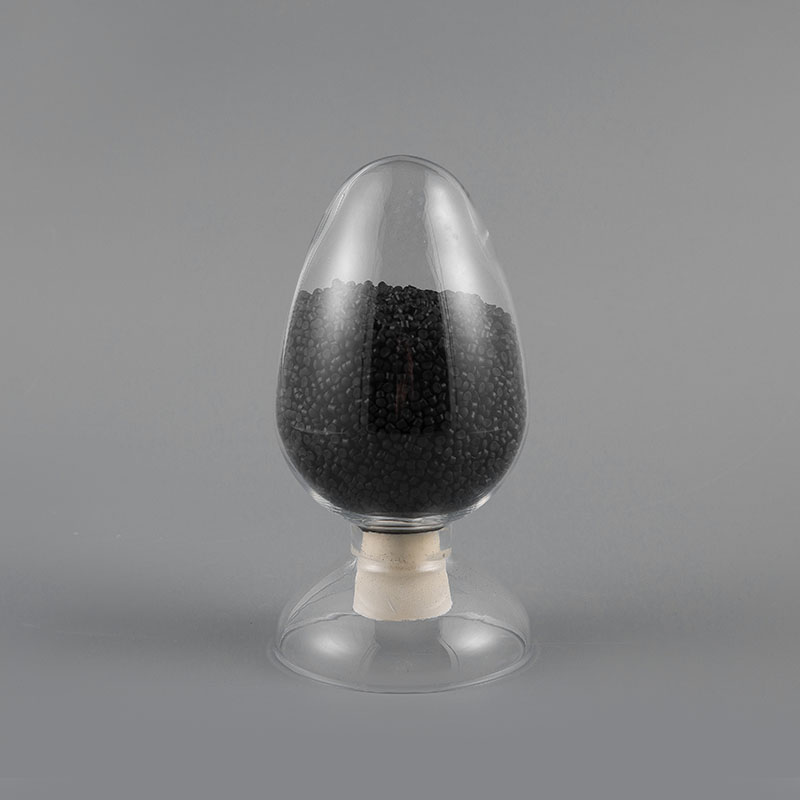 Wholesale ML-H9001B1 90℃ Halogen-Free Low Smoke Flame Retardant Class B1 Sheath We Are China Wholesale ML-H9001B1 90℃ Halogen-Free Low Smoke Flame Retardant Class B1 Sheath Compound Suppliers, Factory, Hangzhou Meilin...View Product →
Mechanical and Thermal Requirements Come With the Fire Specification
Fire approval is necessary, but it is only the first stage of qualification. A railway cable compound also has to keep its mechanical properties after years of heat, vibration, and contact with fluids. Continuous temperature ratings of 90 °C, 105 °C, or 125 °C determine the current a conductor can carry without over-ageing the insulation. Oil resistance matters because diesel, grease, and cleaning agents are part of daily railway life. Tensile strength and elongation retention after thermal ageing tell you whether a cable can still be bent and terminated after ten years in service. The table below summarises the areas that should be written into a procurement specification.
| Property | What It Affects | Typical Target in Railway Projects |
|---|---|---|
| Flame retardancy | Flame spread along the cable during a fire | Pass R22/R23 flame-spread requirements; oxygen index of 32 or above |
| Smoke density | Visibility and escape time in tunnels and enclosed spaces | VOF4 and Ds values within EN 45545-2 limits |
| Smoke toxicity | Survival conditions for passengers and crew | Toxicity index within EN 45545-2 limits |
| Temperature class | Continuous current rating and overload behaviour | 90 °C to 125 °C rating with verified long-term thermal ageing |
| Oil and fuel resistance | Contact with diesel, grease, and acidic cleaning agents | Retention of tensile strength and elongation after oil immersion |
| Mechanical integrity | Bending, vibration, and installation damage | Tensile strength and elongation retention after thermal and fluid ageing |
Thermoplastic or Crosslinked: Choosing the Right LSZH Platform
Once the fire and smoke targets are fixed, the next decision is which polymer platform can deliver them across the whole service life of the cable. Both thermoplastic and crosslinked LSZH compound families are used in railway applications, and the choice depends on operating temperature, fluid exposure, and how much space the cable design can afford.
Thermoplastic LSZH: The Practical Default for Sheathing
Thermoplastic grades are melt-processed on standard extrusion lines, handle scrap more easily, and offer a strong balance of flame retardancy, flexibility, and cost. For 90 °C-rated sheath and insulation in many transit applications they remain the first choice. The main limitation is that thermoplastic formulations rely heavily on metal hydroxide fillers, and heavy filler loading can reduce elongation and complicate extrusion if the dispersion is not carefully controlled. Moisture absorption and filler distribution therefore have to be checked batch by batch, not just at the design stage.
Crosslinked LSZH: When Heat, Oil, and Space Become Constraints
Silane crosslinking and radiation crosslinking both convert the polymer into a three-dimensional network. The practical gains are a higher continuous temperature rating, better oil and fuel resistance, and improved mechanical toughness at elevated temperature. These properties matter on rolling stock because cables sit close to hot equipment and may be exposed to diesel, grease, acidic cleaning agents, and repeated flexing. A 125 °C oil-resistant radiation-crosslinked LSZH insulation compound is a good example: it keeps the halogen-free, low-smoke nature of the material while extending thermal endurance and resisting the fluids a locomotive cable is likely to meet. Thin-wall crosslinked insulation also reduces cable diameter and weight, which adds up quickly across hundreds of metres of wiring.
Wholesale ML-FJ125NY 125℃ oil-resistant irradiated halogen-free flame-retardant We Are China Wholesale ML-FJ125NY 125℃ oil-resistant irradiated halogen-free flame-retardant polyolefin insulation material Suppliers, Fa...View Product →
The Inner Sheath Is a Safety Layer, Not a Detail
In multi-core cables, the space between the inner sheath and the individually insulated cores can hold oxygen and help a fire travel along the cable body. A halogen-free, low-smoke oxygen-barrier inner sheath compound closes that path by limiting the oxygen supply at the innermost construction layer. It slows the spread of combustion and gives the outer sheath less work to do. Specifying the inner sheath with the same care as the outer jacket is one of the most cost-effective ways to improve the overall EN 45545-2 performance of a cable design, especially in designs where space forces conductors closer together.
Wholesale ML-H9001G Halogen-Free Low Smoke Oxygen Barrier Inner Sheath Compound We Are China Wholesale ML-H9001G Halogen-Free Low Smoke Oxygen Barrier Inner Sheath Compound Suppliers, Factory, Hangzhou Meilin New Mate...View Product →What to Verify Before You Commit to a Railway LSZH Compound
Qualifying a new compound takes time, and the cost of a failed approval is far higher than the price of a few bags of material. These are the checks that cable engineers and procurement teams should run before ordering in volume:
- Match the grade to the exact hazard level and requirement set in the tender, whether the project calls for R22 or R23, and HL2 or HL3.
- Ask for test reports produced on the specific compound that will be delivered, not on a material family as a whole.
- Confirm the temperature class and long-term thermal ageing data against your conductor size, current load, and installation environment.
- Test oil, fuel, and cleaning-agent resistance with the fluids actually used on the operator’s network, since standard reference oils do not always match real site conditions.
- Run an extrusion trial on your own line to check melt stability, surface finish, moisture control, and output rate.
A compound specification is only as trustworthy as the production and testing behind it. A supplier that can demonstrate consistent results with in-house laboratory testing equipment and batch traceability reduces the risk that a production batch drifts out of specification after approval. Because fire behaviour depends heavily on filler dispersion and moisture control, routine process consistency is not a quality-department extra; it is a safety requirement that should be audited before the first commercial delivery.
Start With the Standard, Then Choose the Compound
Railway cable specification runs as a chain: the operator’s fire-safety strategy sets the hazard level, the hazard level sets the EN 45545-2 requirement set, and the requirement set decides which compound technology can be used. Working through that sequence in order makes the choice of grade much simpler. For sheath applications, start with a proven B1-class LSZH sheath grade. For inner layers, add an oxygen-barrier compound. For insulation that must survive oil and continuous heat, move to crosslinked LSZH. Sourcing all three layers from the range of LSZH compounds for transportation cables that a single supplier offers gives you consistent process behaviour across the whole cable construction, which in turn simplifies extrusion, testing, and certification. Getting the material right at the start is the shortest path to a cable that passes the test once and survives in service for decades.